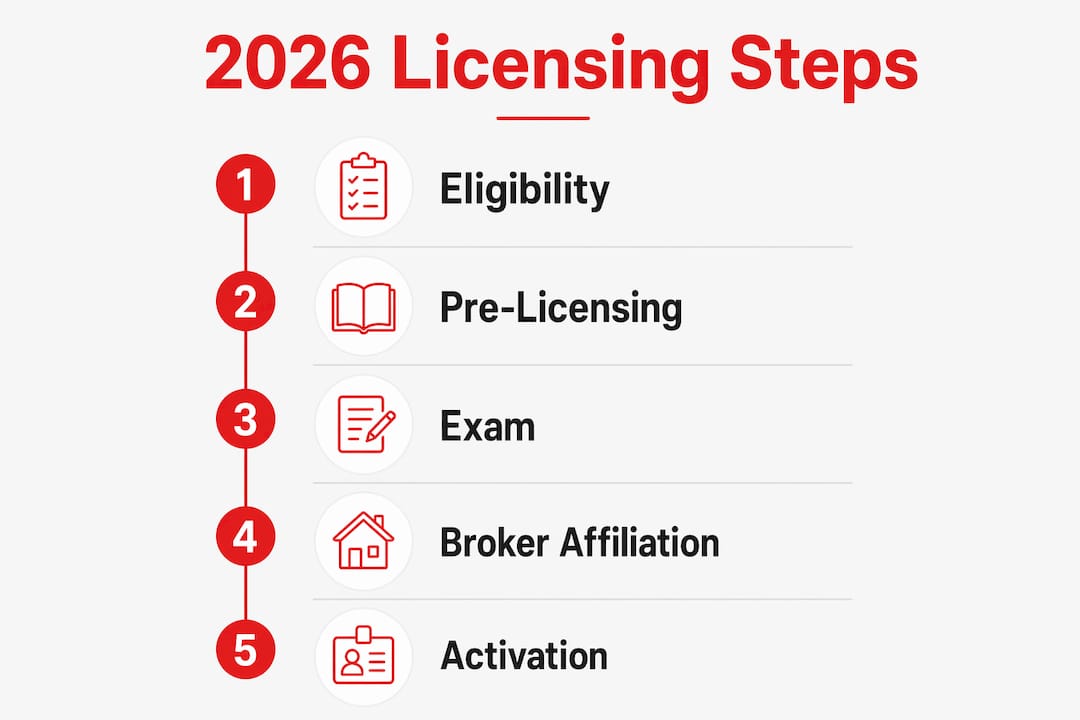
Getting a real estate license in 2026 means completing state-approved pre-licensing education, passing a two-part licensing exam, clearing a background check, and affiliating with a licensed broker to activate your license. The full licensing process typically takes 2–6 months, depending on your state’s education requirements and your personal pace. Testing vendors like PSI and Pearson VUE administer the exams in most states. The National Association of REALTORS® sets professional standards once you’re licensed. This guide walks you through every step so you know exactly what to expect before you start.
The real estate licensing process in 2026 starts with meeting your state’s basic eligibility criteria. These requirements exist to protect consumers and set a professional baseline for everyone entering the field.
Most states require applicants to meet the following conditions:
Pro Tip: If you have a prior conviction, contact your state’s real estate commission before enrolling in courses. Many commissions offer pre-application eligibility reviews so you are not investing time and money into a license you cannot receive.
The background check is not a formality. States like New York and New Jersey review each case individually, weighing the nature of the offense, how long ago it occurred, and evidence of rehabilitation. Getting clarity early saves you from a costly surprise at the finish line.
Pre-licensing education is the first real commitment in the real estate certification process. The required hours vary significantly by state, ranging from 40 hours in states like Michigan to more than 180 hours in states like Texas and California. That gap matters when you are budgeting your time.
Course content typically covers real estate principles, property law, contracts, finance, and state-specific regulations. Every state requires you to use an approved provider. Taking a course from an unapproved school means starting over.
Here is how the major course formats compare:
| Format | Best For | Typical Duration | Cost Range |
|---|---|---|---|
| Self-paced online | Working adults, flexible schedules | 4–12 weeks | $150–$500 |
| Live online (virtual classroom) | Structure seekers, Q&A access | 4–8 weeks | $200–$600 |
| In-person classroom | Hands-on learners, networking | 4–10 weeks | $300–$700 |
The cost of a real estate license in 2026 runs $500–$1,500 in total when you add education, exam fees, application fees, and background check costs. Education is typically the largest single expense, so comparing providers before enrolling is worth the extra hour of research.
Pro Tip: Choose a provider that includes exam prep materials in the course package. Buying them separately later costs more and breaks your study momentum.
Approved providers in states like New Jersey, New York, Florida, and Pennsylvania include both national platforms and state-specific schools. Confirm your provider’s approval status directly on your state real estate commission’s website before paying.
The real estate licensing exam is a computer-based test with two distinct sections: a national portion and a state-specific portion. You must pass each section separately. A passing score on one does not carry over if you fail the other.

The exam structure typically includes 80–100 questions on national topics and 40–50 questions on state law, with a combined time limit of 2–3 hours. Most states require a passing score of 70–75% on each section. PSI and Pearson VUE administer the majority of state exams at testing centers across the country.
Here is a proven approach to prepare effectively:
Pro Tip: Treat every practice test like the real thing. Set a timer, sit at a desk, and avoid looking up answers mid-test. Simulating exam pressure is the only way to build the mental stamina the real exam demands.
Candidates often underestimate the state law section. Spending at least 30% of your study time on state-specific content is a reliable benchmark for first-time pass rates.
Passing the exam does not make you a practicing agent. Your license remains inactive until a licensed broker sponsors and activates it. Broker affiliation is mandatory in every state before you can legally represent buyers or sellers.
This step catches many new agents off guard. They pass the exam, then spend weeks searching for a broker, which delays their start date unnecessarily. The smarter move is to start your broker search while you are still studying for the exam.
When evaluating brokers, consider these factors:
For New York specifically, broker sponsorship requirements include additional paperwork and state-specific affiliation rules. Knowing these details before you start interviewing brokers saves time.
The real estate licensing process in 2026 has several predictable failure points. Knowing them in advance puts you ahead of most first-time candidates.
The most common mistakes include:
The full licensing timeline from enrollment to active license runs 2–6 months for most candidates. Candidates who plan broker outreach in parallel with their coursework consistently land on the shorter end of that range.
Getting a real estate license in 2026 requires completing state-approved education, passing a two-part exam with separate passing scores, clearing a background check, and securing broker sponsorship before you can practice.
| Point | Details |
|---|---|
| Eligibility comes first | Confirm age, residency, and background check rules with your state commission before enrolling. |
| Education hours vary widely | Required pre-licensing hours range from 40 to 180+ depending on your state. |
| Exam has two separate sections | You must pass both the national and state portions independently, each at 70–75%. |
| Broker search starts early | Begin interviewing brokers during your course to avoid delays after passing the exam. |
| Budget $500–$1,500 total | Factor in education, exam fees, application costs, and background check fees from the start. |
Most people who struggle with the licensing process do not fail because the material is too hard. They fail because they treat each step as a separate event instead of running them in parallel.
The candidates I have seen move fastest are the ones who start broker conversations in week three of their course, not week three after passing the exam. That single habit cuts weeks off their timeline. Broker interviews also sharpen your understanding of the market before you even sit for the exam, which is a real advantage.
The other thing I would tell anyone starting this process: do not choose your education provider based on price alone. A course that costs $50 less but lacks instructor access or quality practice exams will cost you far more in retake fees and lost time. The education phase is where you build the foundation. Cutting corners there shows up on exam day.
Plan carefully, budget honestly, and start your broker search early. The 2–6 month timeline is real, but the people who hit two months are the ones who treat every step as something they can work on simultaneously.
— Noelle
Recareercenter offers state-approved pre-licensing courses in New Jersey, New York, Florida, and Pennsylvania, with live online, in-person, and self-paced formats designed to fit around your existing schedule. Whether you are working full-time or managing family commitments, the programs are built to keep you moving toward your license without forcing you to choose between education and life.
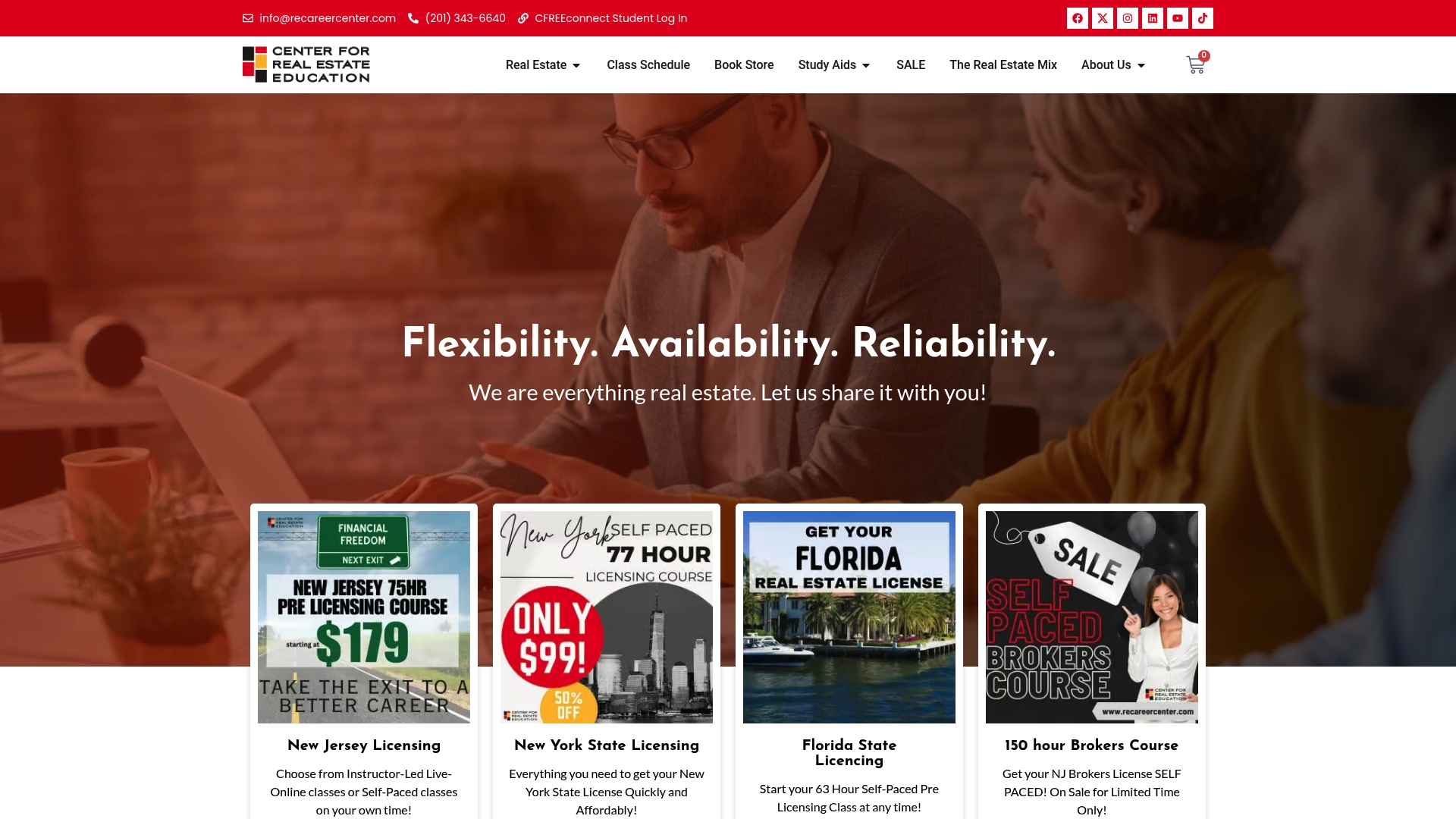
Recareercenter’s courses cover all required content for the 2026 licensing exam, with instructor support and exam prep resources included. Students also receive guidance on broker affiliation and career development beyond the license itself. Browse the full catalog of state-approved real estate courses and find the program that fits your state, schedule, and goals. If you are weighing your format options, the online vs. in-person comparison is a practical starting point.
The typical licensing timeline runs 1–6 months from course enrollment to active license. Candidates who start their broker search during their coursework consistently finish faster.
Most states require a score of 70–75% on both the national and state-specific portions of the exam. Each section must be passed independently, and a passing score on one does not apply to the other.
Total costs typically range from $500–$1,500, covering pre-licensing education, exam registration, state application fees, and background check costs. Costs vary by state and provider.
You do not need a broker to take your courses or sit for the exam. However, your license stays inactive until a licensed broker sponsors you, so you cannot legally practice without broker affiliation.
Most states allow you to retake the section you failed without retesting the section you passed. Use your score report to identify weak areas and focus your study time before rescheduling.