Obtaining a Florida real estate license requires completing a 63-hour FREC-approved pre-license course, passing the state exam at a Pearson VUE testing center, submitting your application with fingerprints to the DBPR, and completing post-license education before your first renewal. The Florida real estate licensing process is one of the most clearly defined in the country, which works in your favor. Follow each step in sequence and you will avoid the delays that trip up most first-time applicants. Total costs typically range from $320 to $530, and the full timeline runs 6 to 13 weeks from start to active license.
Before you enroll in a single course, you must meet Florida’s baseline eligibility criteria. These are set by the Florida Real Estate Commission (FREC) and enforced by the Department of Business and Professional Regulation (DBPR).
Here is what you need to qualify:
The no-residency rule is one of Florida’s most overlooked advantages. If you live in Georgia or New York and want to practice in Florida, you can pursue licensure without relocating first. The background check does not automatically disqualify applicants with prior offenses. DBPR reviews each case individually, so disclosure and context matter.
The 63-hour pre-license course is the foundation of the Florida real estate licensing process. FREC mandates this education for all sales associate applicants, and you cannot sit for the state exam without a certificate of completion.
You have three delivery options:
Course content covers Florida real estate law, principles and practices, contracts, finance, and agency relationships. The course ends with a mandatory final exam. You need a 70% or higher to pass and receive your completion certificate, which qualifies you to schedule the state exam.
Course costs typically run between $150 and $350 depending on the provider and format. Only courses approved by FREC and listed with DBPR count toward your requirement. Verify approval status before you pay.
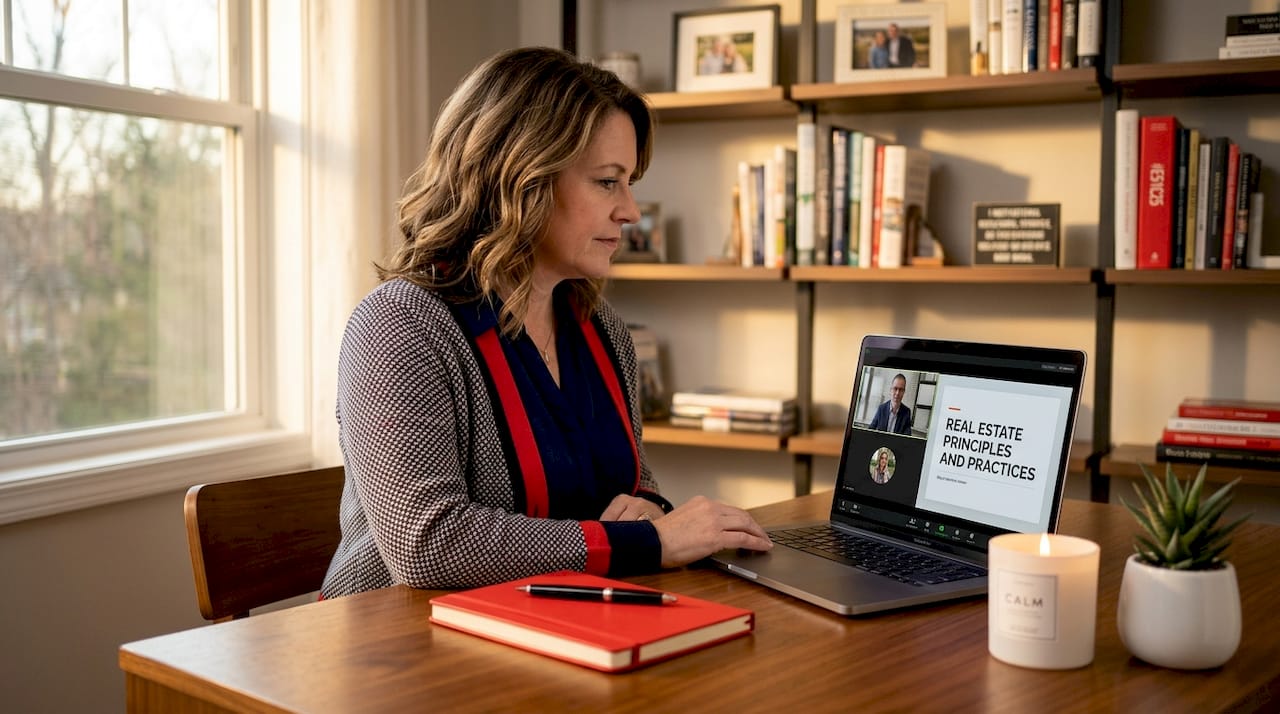
Pro Tip: Choose your course format based on how you actually study, not how you think you should study. If you have never finished a self-paced online program before, a live online course with scheduled sessions will keep you on track.
The Florida sales associate state exam is administered exclusively by Pearson VUE at physical testing centers across the state. You cannot take it remotely. Understanding the format before test day removes a significant source of anxiety.
Here is what the exam looks like:
“Candidates who use weekly practice tests and track their weak topics consistently outperform those who rely on passive reading alone.” This is the single most reliable pattern among first-time passers.
Effective preparation combines practice exams and flashcards with short, focused study sessions spread over several weeks. Cramming the night before is particularly ineffective for a content-heavy exam like this one. Recareercenter offers a dedicated Florida exam prep course built specifically to target the question types and topics that appear most frequently on the state exam.
Pro Tip: On test day, arrive 30 minutes early, bring two forms of ID, and eat a real meal beforehand. Pearson VUE centers are strict about check-in procedures, and rushing through them adds unnecessary stress.
Passing the exam is a milestone, not the finish line. You still need to complete your DBPR application, submit fingerprints, pay fees, and affiliate with a licensed broker before your license becomes active.
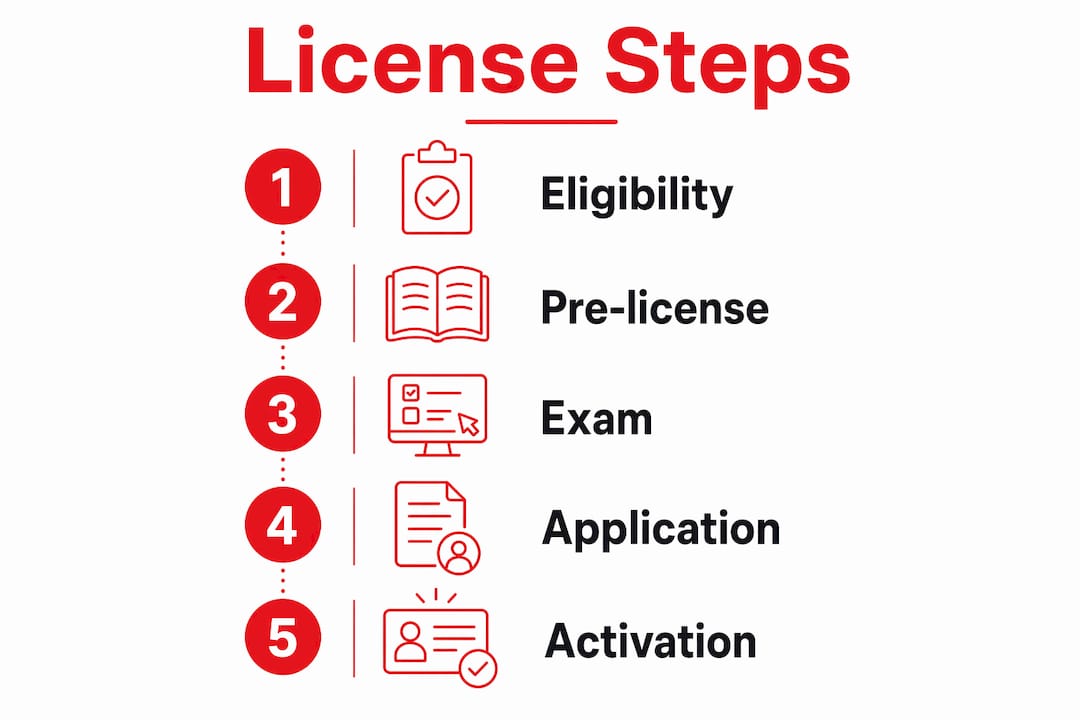
Here is a breakdown of the key steps and costs:
| Step | Detail |
|---|---|
| Electronic fingerprints | Submit via LiveScan using DBPR’s ORI number before or during application |
| DBPR Form RE 1 | Complete online at MyFloridaLicense.com or submit by mail |
| Application fee | $83.75 payable to DBPR |
| Exam fee | $36.75 payable to Pearson VUE at scheduling |
| Fingerprinting fee | Approximately $50 to $60 depending on LiveScan provider |
| Broker affiliation | Submit DBPR Form RE 11 to activate your license under a licensed Florida broker |
DBPR processing typically takes 1 to 4 weeks for the background check alone. The full licensing timeline from enrollment to active license runs 6 to 13 weeks. That range is wide because background check complexity varies by applicant history.
Your license is issued in inactive status after approval. It does not become active until you affiliate with a licensed Florida broker by submitting Form RE 11. You cannot legally practice real estate or earn a commission until that affiliation is on file with DBPR. Choose your sponsoring broker carefully. The right brokerage provides training, mentorship, and transaction support that no pre-license course can replicate.
Passing the exam and affiliating with a broker is not the end of your licensing obligations. Florida requires a 45-hour post-license course before your first renewal, which falls between 18 and 24 months after your initial license date.
Here is how the two phases of ongoing education compare:
| Education Phase | Hours Required | Deadline | Consequence of Non-Compliance |
|---|---|---|---|
| Post-license course | 45 hours | Before first renewal | License becomes null and void |
| Continuing education | 14 hours | Every 2 years after first renewal | License becomes involuntarily inactive |
The stakes on post-license education are severe. Missing the deadline does not suspend your license. It voids it entirely, which means you must go through the full requalification process as if you were a brand-new applicant. That includes retaking the pre-license course and the state exam.
The 45-hour course itself covers practical business skills that the pre-license course does not touch: contract negotiation, listing strategies, buyer representation, ethics, and business planning. Think of it as the real-world training that prepares you to actually build a career, not just pass a test. Recareercenter’s post-license courses for new students are designed to fulfill this requirement while giving you skills you will use immediately in the field.
After your first renewal, the real estate license renewal process requires 14 hours of continuing education every two years. Florida’s renewal cycle runs on a March 31 or September 30 deadline depending on your license issue date. Missing the renewal window triggers late fees and potential inactive status.
Pro Tip: Schedule your 45-hour post-license course within the first six months of getting your license. Do not wait until month 20. Life gets busy, and losing your license to a missed deadline is entirely preventable.
Completing the Florida real estate licensing process requires meeting eligibility criteria, finishing the 63-hour pre-license course, passing the Pearson VUE state exam, submitting your DBPR application, and completing the 45-hour post-license course before your first renewal.
| Point | Details |
|---|---|
| Pre-license education | Complete a FREC-approved 63-hour course with a 70% passing grade before scheduling the state exam. |
| State exam format | Pass 75 out of 100 questions at a Pearson VUE center within the 3.5-hour time limit. |
| Application and fees | Budget $320 to $530 total and plan for a 6 to 13-week processing window from DBPR. |
| License activation | Your license stays inactive until you affiliate with a licensed Florida broker via Form RE 11. |
| Post-license deadline | Complete the 45-hour post-license course before your first renewal or your license becomes void. |
The Florida licensing process is well-documented, but the gap between knowing the steps and actually completing them on time is where most people struggle. I have seen candidates breeze through the pre-license course and then stall for three months waiting on DBPR approval because they did not submit fingerprints early enough. That delay is entirely avoidable if you submit fingerprints at the same time you enroll in your course, not after you finish it.
The other pattern I see constantly is candidates underestimating the state exam. A 75% passing score sounds forgiving until you realize that Florida real estate math questions and state-specific law questions carry the same weight as general knowledge questions. Candidates who treat the exam like a formality and skip structured practice tend to retake it at least once. Those who use timed practice tests from the start pass on the first attempt at a noticeably higher rate.
My honest advice on course format: if you are someone who works best with a deadline and a live instructor, do not choose self-paced just because it is cheaper. The cost difference between formats is small compared to the cost of retaking the exam or delaying your start date by two months because you could not finish the course on your own schedule.
Finally, do not treat the 45-hour post-license course as an afterthought. The agents who complete it early are the ones who actually use the content. The agents who wait until the last minute treat it as a checkbox and miss the practical value it delivers.
— Noelle
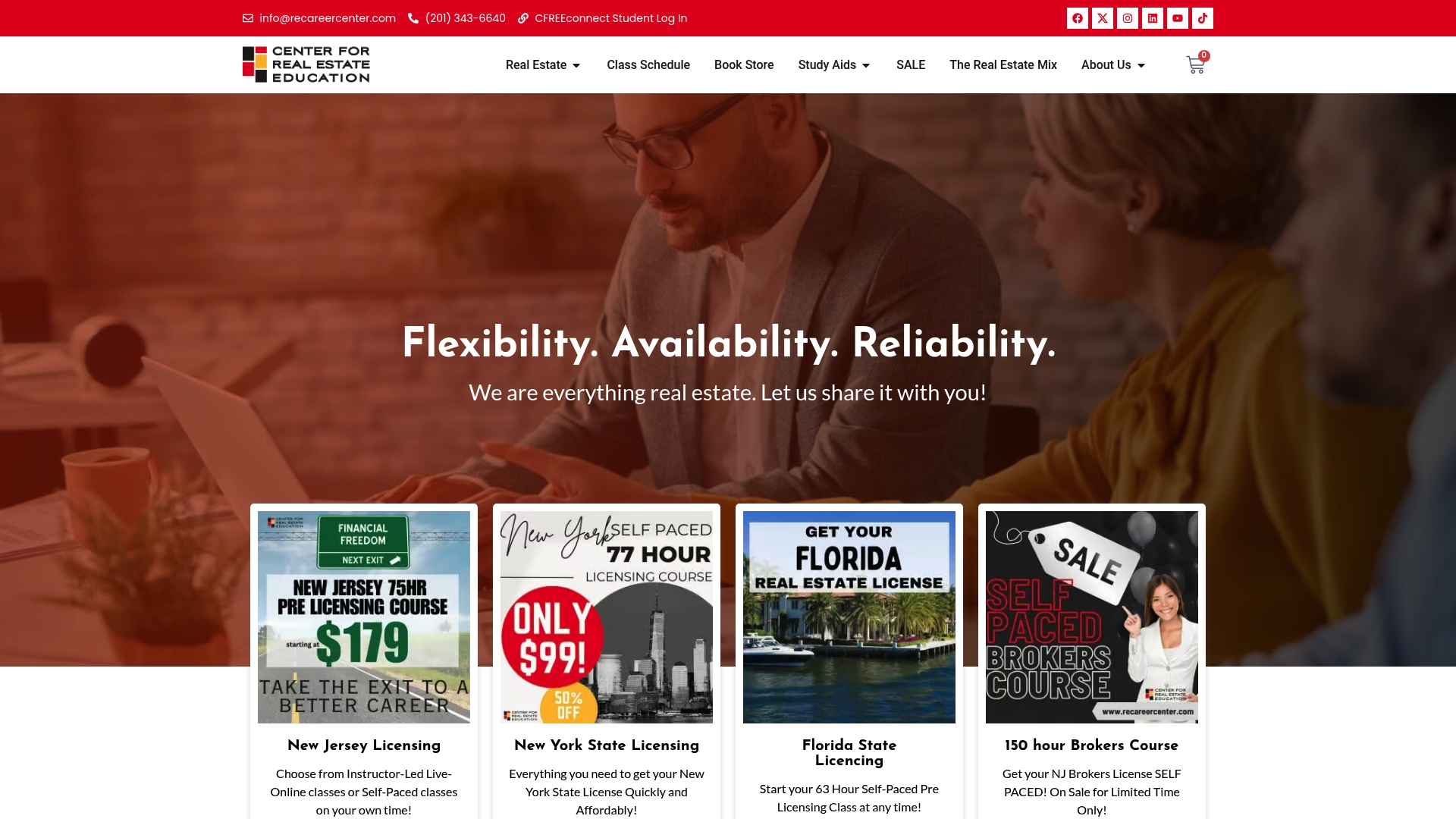
Recareercenter offers Florida-approved pre-license, exam prep, and post-license courses in self-paced, live online, and in-person formats. Every course is built around real-world application, not just exam memorization. Whether you are starting from scratch or need to fulfill your post-license requirement before your first renewal deadline, Recareercenter has a program that fits your schedule and budget. Explore the full range of Florida real estate courses available now, or learn more about online vs. in-person options to find the format that works best for you. Career support and continuing education resources are also available for agents at every stage.
The full process takes 6 to 13 weeks from enrollment to active license, depending on DBPR processing times and how quickly you complete your pre-license course and exam.
You need to answer 75 out of 100 questions correctly on the state sales associate exam, administered by Pearson VUE at an in-person testing center.
Missing the 45-hour post-license deadline causes your license to become null and void, requiring full requalification including retaking the pre-license course and state exam.
No. Florida has no residency requirement for sales associate licensure. Out-of-state applicants who meet the age, education, and background criteria can apply and obtain a Florida license.
Total costs range from $320 to $530, covering the pre-license course ($150 to $350), the Pearson VUE exam fee ($36.75), the DBPR application fee ($83.75), and fingerprinting ($50 to $60).