Most people assume the 63-hour pre-license education requirement is just a box to check before sitting for the state exam. It isn’t. Florida real estate pre-license hours explained properly reveal a course built to prepare you for the real work of representing buyers and sellers, not just to memorize answers for a multiple choice test. Florida mandates a 63-hour Sales Associate Course I from a FREC-approved provider before you can even schedule your licensing exam. Understanding exactly what those hours cover, how to complete them strategically, and where they fit within the broader licensing process puts you ahead of everyone who treats this as a formality.
| Point | Details |
|---|---|
| 63 hours required by law | Every Florida sales associate applicant must complete a FREC-approved 63-hour pre-license course before taking the state exam. |
| Certificate valid for two years | You have two years from course completion to pass the state exam before the certificate expires. |
| Course covers far more than exam prep | Topics include real estate law, contracts, property rights, ethics, and market analysis rooted in real-world practice. |
| Multiple formats available | You can complete the course online, in-person, or via livestream to fit your schedule. |
| Full licensing takes 5 to 16 weeks | From enrolling in the course to receiving your active license, expect to spend one to four months depending on your pace. |
The Florida Real Estate Commission, known as FREC, sets the standards for all pre-license education in the state. Before anything else, you need to meet the baseline eligibility requirements to enroll and eventually apply for your license.
Here is what Florida requires for all prospective sales associates:
You do not need prior real estate experience, and there is no Florida residency requirement for licensure. That surprises many people who assume they must already live in the state to pursue a Florida license. The course is your starting point regardless of where you are located when you begin.
Pro Tip: Submit your DBPR license application and complete fingerprinting early, even before you finish the 63-hour course. Processing can take several weeks, and getting these steps started in parallel means you are ready to schedule your exam the moment you receive your course completion certificate.
The 63-hour course doubles as a professional foundation, not just a license prep vehicle. FREC designed the curriculum to give new agents the knowledge they need to work competently from day one. Here is what you will study:
The course is available online, in-person, or via livestream, which makes it accessible whether you are working full-time, raising a family, or managing multiple commitments simultaneously.
Pro Tip: Do not wait until the end of the course to start reviewing. Study each module as you complete it and take notes on Florida-specific rules, since the state exam heavily tests Florida law and FREC regulations rather than general real estate concepts.
Completing 63 hours sounds manageable until you factor in a job, family, and everything else competing for your attention. The good news is that the format flexibility for Florida real estate courses makes this genuinely workable for most people.
The full licensing process typically takes five to sixteen weeks from course enrollment through receiving an active license. Most of that range comes down to how fast you complete the 63-hour course and how quickly you schedule your state exam after finishing.
One factor people underestimate is the course final exam. You must pass it to receive your course completion certificate, which you need before the DBPR will let you sit for the state licensing exam. Providers set their own passing score thresholds, though most require at least 70 percent. Going into that final unprepared is one of the most common reasons people delay their entire timeline by weeks.
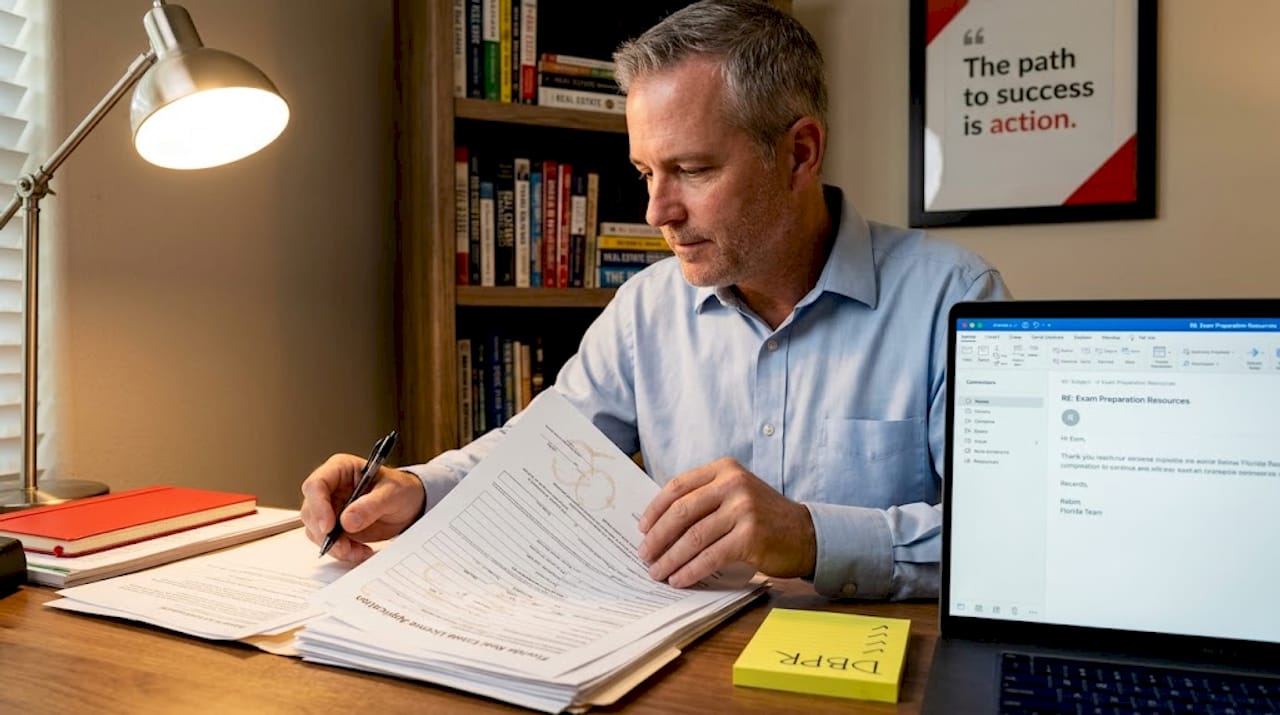
When selecting a course provider, check that they hold FREC approval and, ideally, ARELLO certification. (The Center for Real Estate Education does.) ARELLO is an independent accreditation body that verifies online course quality. Choosing an accredited provider protects you from the frustrating scenario of completing a course only to find it does not meet DBPR requirements. You can explore exam prep resources to complement your coursework once you are midway through.
The pre-license course is one step inside a larger sequence. Understanding the full picture helps you plan your time and avoid stalls between each stage.
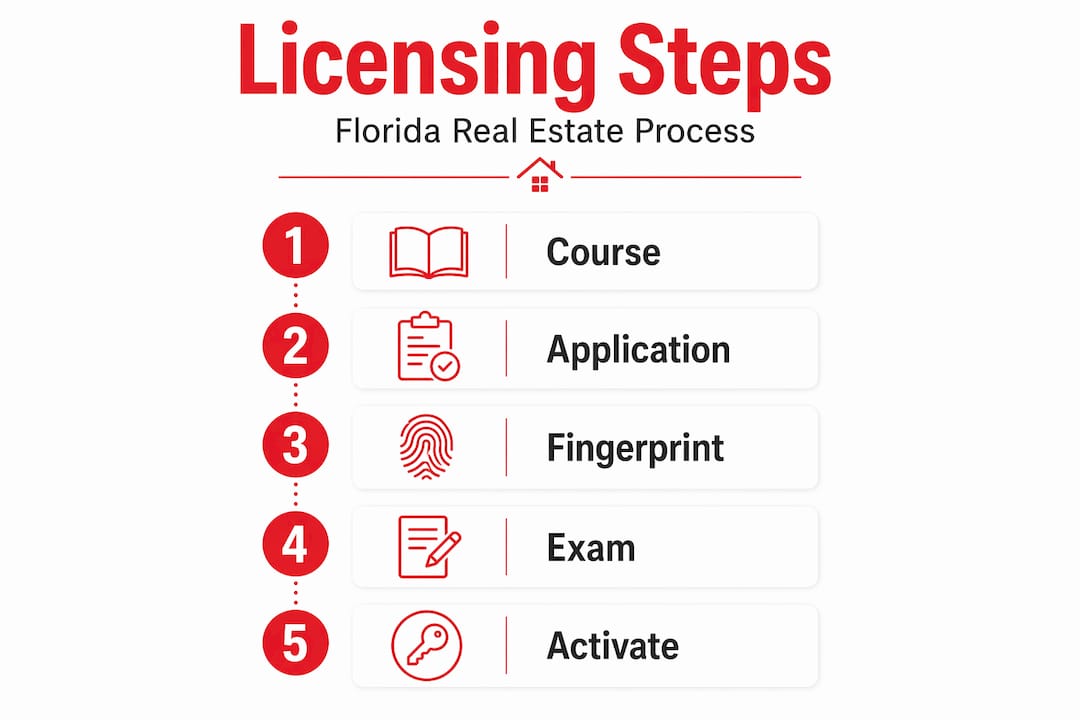
| Step | What happens | Timing |
|---|---|---|
| Enroll in and complete 63-hour course | Complete FREC-approved pre-license education and pass the course final exam | Weeks 1 to 8 (varies by format) |
| Submit DBPR application | Apply for your sales associate license through the Florida DBPR portal | Can begin before course ends |
| Fingerprinting and background check | Fingerprinting and background checks are required by the DBPR before the application is approved | Complete early to avoid delays |
| Pass the state licensing exam | 100-question exam administered by Pearson VUE; 75 percent passing score required | After course certificate and DBPR approval |
| Affiliate with a broker | Your license must be activated under a licensed Florida broker before you can work | Before or right after passing exam |
| Post-license and continuing education | 45-hour post-licensing required before first renewal; 14-hour CE every two years after | Ongoing once licensed |
One point worth emphasizing: your license is technically inactive until a broker activates it. Passing the state exam makes you licensed on paper, but you cannot legally perform real estate services until you are affiliated. Many new agents line up their broker conversation before they even schedule the exam, which eliminates a potential gap of several weeks.
The 63-hour course also sets you up for everything that follows. The post-license education and continuing education for real estate Florida requires will build directly on the foundation you establish during pre-license training. Agents who treated the 63 hours seriously report that topics covered there come back in client conversations, contract negotiations, and compliance situations long after the exam is over.
I have seen hundreds of new agents go through pre-license education, and the ones who treat it like a real learning experience are noticeably different when they hit the field. The agents who sprint through to get the certificate and move on are the ones who freeze when a client asks a pointed question about property rights or easements.
The course functions as a professional boot camp. The knowledge you build during those 63 hours is not abstract. It shows up when you are reviewing a purchase contract at 9 p.m. with a nervous first-time buyer sitting across from you. It shows up when a listing has a title issue and your client needs you to explain what it actually means.
My honest advice is to treat every hour of the course as if a client is watching. Take notes you would actually refer back to. Ask the questions that feel too basic. Real estate transactions involve large sums of money and legally binding agreements. Foundational gaps at the pre-license stage have a way of becoming expensive mistakes at the closing table.
The licensing process is not a sprint. It is a setup for a long career. Approaching it that way from day one changes everything.
— Noelle
Getting the hours done matters. Getting them done with a provider who prepares you for actual practice matters more. Recareercenter offers a self-paced 63-hour Florida pre-licensing course designed for working adults who need flexibility without sacrificing quality. The course meets FREC requirements and walks you through every topic tested on the state exam, with instructor support available when you need it.
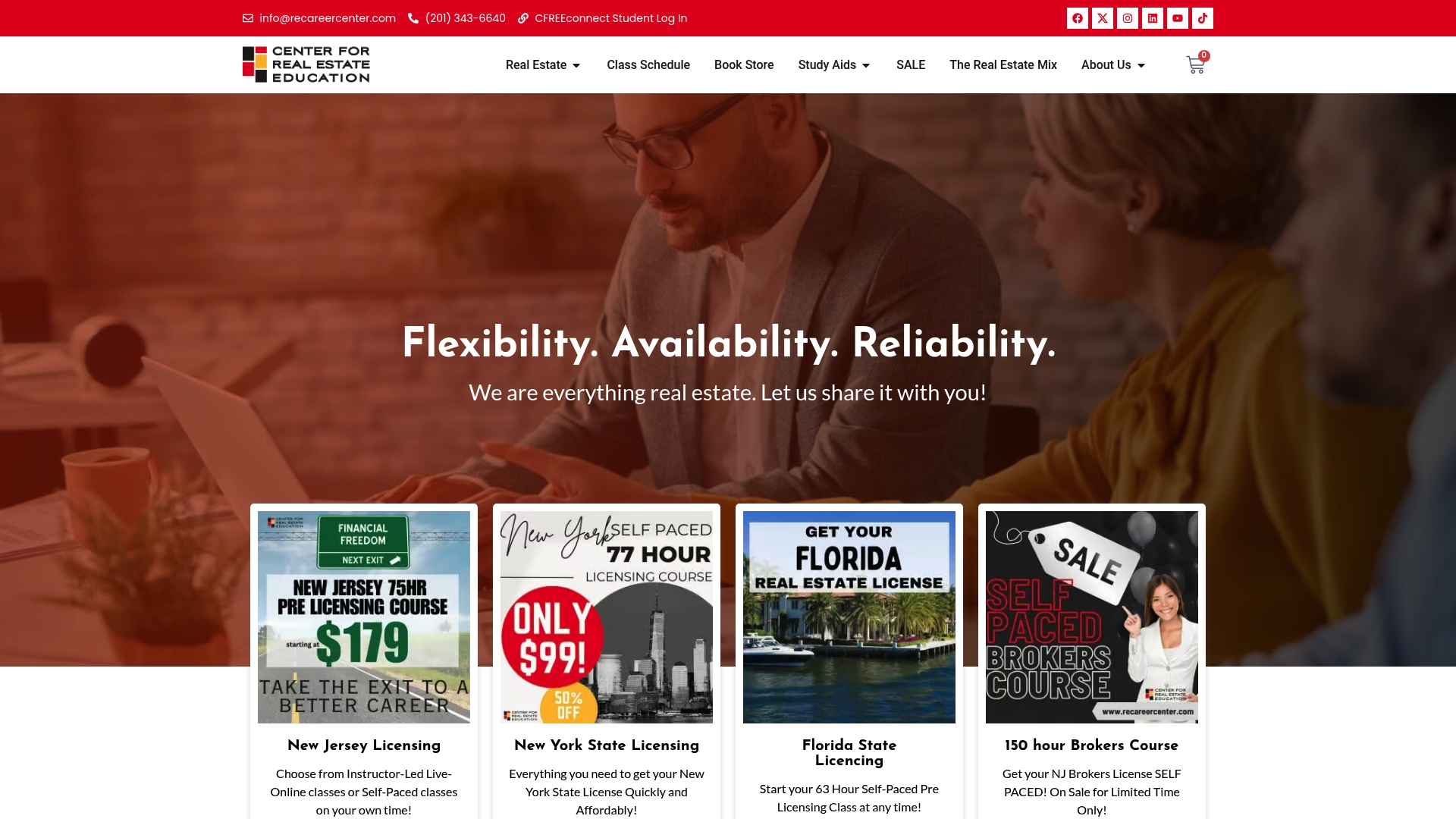
Not sure whether online or in-person learning fits your style? Recareercenter breaks down exactly what to expect in your format options so you can choose with confidence. Whether you want to move at your own pace or prefer a live structured environment, there is a path designed for how you actually learn. Start when you are ready and finish on your timeline.
Florida requires 63 hours of pre-license education through a FREC-approved provider for all sales associate applicants. Completing and passing the course final exam is required before you can apply for the state licensing exam.
Most students finish in four to eight weeks, though the full licensing timeline from enrollment to active license typically runs five to sixteen weeks depending on pace and scheduling.
Yes. Your course completion certificate is valid for two years from the date you finish the course. If you do not pass the state exam within that period, you will need to complete the course again.
Yes. The 63-hour course is available in online self-paced, livestream, and in-person formats, giving you the flexibility to complete Florida real estate courses in the way that fits your life.
After finishing and passing the course final exam, you submit your Florida real estate license application to the DBPR, complete fingerprinting, and schedule your state licensing exam through Pearson VUE. Once you pass, you affiliate with a licensed broker to activate your license.