
Earning a real estate license while in school is fully achievable. No state requires a college degree to get licensed, and most students can complete the entire process in as little as 2–6 months. The standard industry term is “pre-licensing education,” and understanding how it works is the first step toward building a real income before graduation. This guide covers eligibility rules, course formats, the step-by-step licensing process, and how to manage it all without burning out academically.
The core requirements for a real estate license are simpler than most students expect. No state requires a college degree for a standard salesperson license. That means a high school junior or college freshman can qualify as long as they meet a few basic criteria.
Here is what most states require:
State rules differ in meaningful ways. Florida requires applicants to be at least 18 and hold a high school diploma. New Jersey and New York follow similar age minimums. Texas requires 18 as well, but its pre-licensing hour requirement is among the highest in the country.
Pro Tip: Check your state real estate commission’s website directly before enrolling in any course. Requirements change, and a course that was approved last year may not be approved today.
Pre-licensing education is a formal, state-mandated requirement. College classes rarely substitute for mandatory pre-licensing hours, even if you are majoring in business or finance. You must complete a state-approved pre-licensing program regardless of your academic background.

The two main formats are self-paced online courses and scheduled in-person classes.
| Format | Best for | Cost range | Key trade-off |
|---|---|---|---|
| Self-paced online | Full-time students with irregular schedules | $200–$500 | Requires self-discipline to stay on track |
| In-person classroom | Students who prefer structure and live instruction | Varies by provider | Fixed schedule may conflict with classes |
| Live online (hybrid) | Students wanting interaction without commuting | $200–$500 | Requires reliable internet and set meeting times |
Online pre-licensing courses cost between $200 and $500 and offer the scheduling flexibility most students need. State application and exam fees add another $50–$300 on top of course costs. That is the full financial picture before you earn your first commission.
Self-paced platforms are the recommended standard for full-time students managing multiple commitments. You can complete modules at midnight before finals or on a Sunday afternoon between study sessions. In-person classes, by contrast, lock you into a fixed schedule that may collide with midterms.
One critical point: not every online course qualifies for credit in every state. A course approved in Florida may not count in New Jersey. Always verify state approval before you pay.
Pro Tip: Look for providers with ARELLO certification. ARELLO-certified courses meet a recognized national standard for real estate education quality, which reduces the risk of enrolling in a course your state won’t accept.
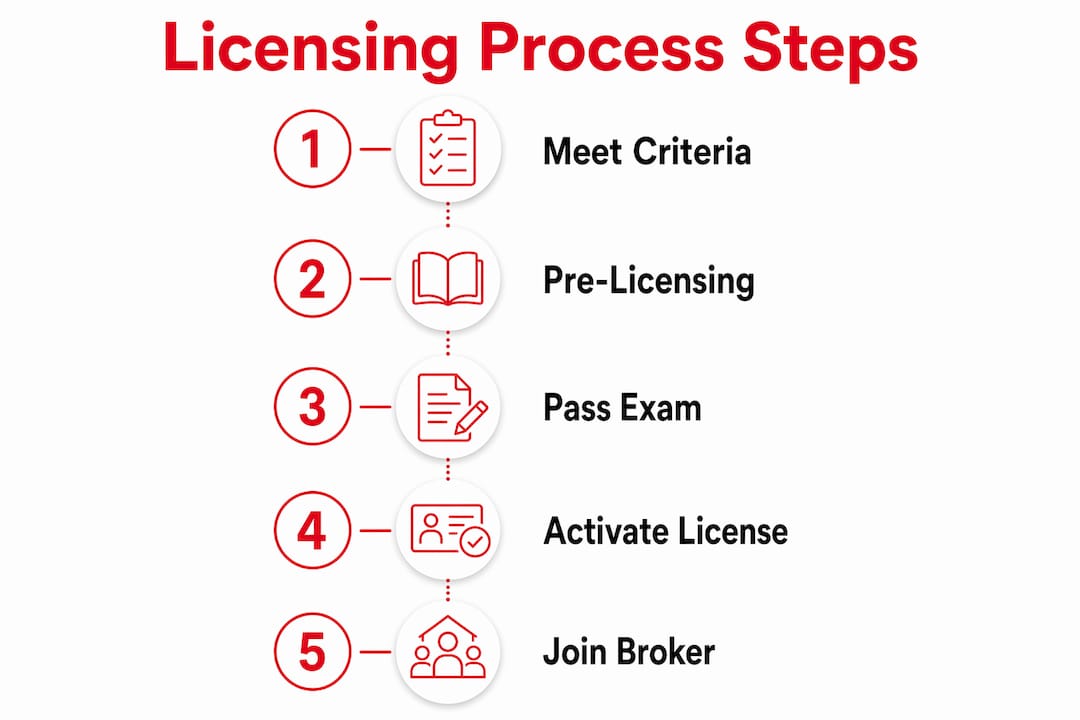
The complete licensing process typically takes 2–6 months. Students who plan around their academic calendar can move through it without major disruption. Here is the full sequence:
Key fees to budget for:
Pro Tip: Schedule your state exam for a low-pressure week in your academic calendar, not during finals. A clear head on exam day makes a measurable difference.
Time management is the single biggest factor in whether a student finishes licensing on schedule. Goal-oriented study schedules aligned with academic semesters give students the best chance of completing both without sacrificing either.
Practical strategies that work:
For students managing scheduling across multiple responsibilities, resources on balancing real estate training offer structured frameworks that go beyond generic time management advice.
Pro Tip: Tell your academic advisor what you are doing. Many advisors can help you select electives that overlap with real estate content, reducing your total study load.
Several misconceptions and process gaps catch students off guard. Knowing them in advance removes most of the friction.
The degree misconception. Many students assume their college major substitutes for pre-licensing coursework. It does not. Most college degrees do not satisfy state pre-licensing course requirements. State-approved hours are always mandatory, full stop.
The activation gap. Passing the state exam does not make you a licensed agent. The delay between passing the exam and becoming an active licensed agent is often underestimated because broker sponsorship and paperwork processing add weeks or months. Start researching brokers before you sit for the exam.
Financial surprises. The total cost of licensing adds up faster than most students plan for. Course fees, exam fees, application fees, and background check costs can total $400–$900 before you earn a single commission. Budget for the full amount upfront.
Background check delays. Processing times vary by state and can add two to four weeks to your timeline. Submit your background check as early as the state allows.
“Treat pre-licensing education as a professional certification that runs parallel to your degree, not as an extension of it. The content is specialized, the legal stakes are real, and the exam is not curved.”
For a deeper look at managing the licensing timeline while carrying a full academic load, the guide on getting licensed while working full-time applies directly to students facing the same scheduling pressures.
Earning a real estate license while in school requires meeting state age and education minimums, completing state-approved pre-licensing hours, and securing broker sponsorship before your license activates.
| Point | Details |
|---|---|
| No degree required | A high school diploma or GED satisfies the education requirement in every state. |
| Pre-licensing hours are mandatory | State-approved coursework (40–180 hours) is always required, regardless of your college major. |
| Budget the full cost | Total licensing costs typically run $400–$900 before you earn your first commission. |
| Broker sponsorship is the final step | Find a sponsoring broker before exam day to avoid activation delays of weeks or months. |
| Online courses fit student schedules | Self-paced formats let you study around midterms, finals, and irregular academic calendars. |
Starting the licensing process while still in school is one of the smartest career moves a young person can make. The students I have seen struggle most are the ones who treat it as an afterthought, something to squeeze in between classes without a real plan. The ones who succeed treat it like a second job with a defined schedule and clear weekly targets.
The broker selection step surprises almost everyone. Students pass the exam, feel accomplished, and then spend weeks scrambling to find a broker willing to sponsor a new agent with no track record. Start those conversations early. Attend local real estate association events, reach out to brokers in your target market, and ask questions before you need the answer.
One more thing worth saying directly: the pre-licensing content is genuinely interesting. Real estate law, contract principles, and property valuation are not dry topics once you see how they connect to real transactions. Students who approach the coursework with curiosity rather than obligation tend to retain more and pass on the first attempt. That mindset shift is worth more than any study hack.
— Noelle
Students who want flexible, state-approved pre-licensing education without the rigid schedule of a traditional classroom have a clear option.
Recareercenter offers live online, in-person, and self-paced real estate courses approved in New Jersey, New York, Florida, and Pennsylvania. The programs are built around ARELLO certification standards and designed for learners who are managing school, work, or both at the same time. Students get instructor support, practical exam preparation, and access to a course catalog that fits around an academic calendar rather than fighting it. New students can browse state-approved licensing courses and find discounted options through the new student course offers section of the site.
Most states require applicants to be at least 18, so high school seniors near that age can begin pre-licensing coursework and sit for the exam once they meet the age requirement. You can complete the course before turning 18 in many states; you just cannot apply for the license until you do.
No. College coursework does not substitute for state-mandated pre-licensing education in almost every state. You must complete a separate state-approved pre-licensing program regardless of your academic major.
The full process typically takes 2–6 months. Students who use self-paced online courses and study consistently during lighter academic weeks often finish closer to the two-month end of that range.
Yes. Passing the state exam is not enough to practice real estate. You must affiliate with a licensed sponsoring broker before your license activates and you can legally work with clients.
Total costs generally fall between $400 and $900, covering pre-licensing course fees ($200–$500), state application and exam fees ($50–$300), and background check fees ($30–$100). Costs vary by state.