
The real estate salesperson job market in 2026 is stable, competitive, and shifting in ways that reward agents who treat the work as a real business. The U.S. Bureau of Labor Statistics counts approximately 532,200 employed real estate brokers and sales agents nationwide, with projected employment growth of 3% from 2024 to 2034, roughly in line with the average for all occupations. That translates to about 46,300 job openings per year, most of them driven by turnover rather than net new positions.
The 2024 median pay for the combined broker and sales agent category sits at $58,960 per year, though actual earnings vary sharply by experience, location, and how aggressively an agent builds their book of business. The market itself adds a layer of complexity: tighter transaction volumes compared to the pandemic-era boom have put downward pressure on commissions, forcing agents to work harder to demonstrate clear value through effective real estate SEO services to clients. That pressure is real, but it also filters out casual participants and rewards professionals who invest in their skills.
Key market facts at a glance:
The career is genuinely accessible, but it is not passive income. The agents who thrive in 2026 are the ones who understand the job market clearly before they enter it.

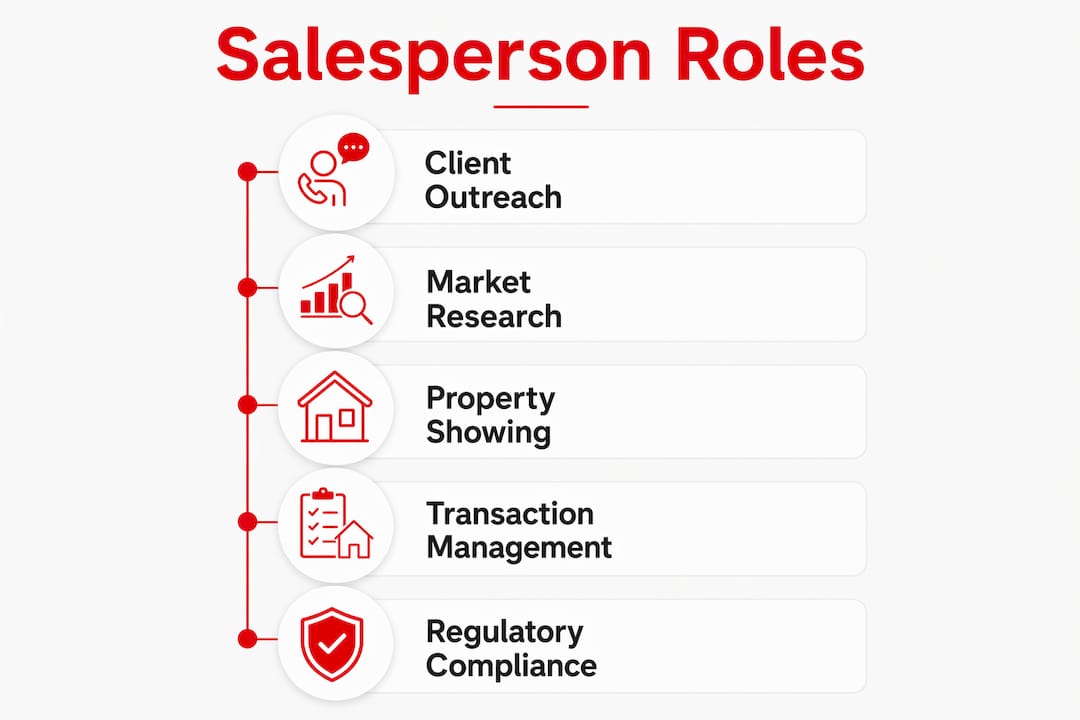
The job description sounds simple: help people buy, sell, and rent property. The actual work is considerably more varied. Real estate sales agents spend their days juggling client communication, market research, property showings, paperwork, and negotiation, often all in the same afternoon.
The BLS Occupational Outlook Handbook outlines the core responsibilities clearly:
One thing most job descriptions understate: agents also need to know local zoning laws, fair housing regulations, and the range of financing options available to buyers. A client asking whether a property qualifies for an FHA loan or sits in a flood zone expects a real answer, not a referral to Google. That depth of local knowledge is what separates productive agents from ones who struggle to close.
Sales agents must work under a licensed broker. They earn a portion of the commission from each transaction, with the broker taking a split as well. The ratio of that split depends on the brokerage agreement and the agent’s production level.
Most real estate agents split their time between an office and the field, but the balance tips heavily toward the field. Showing properties, attending inspections, meeting clients at coffee shops, and previewing new listings all happen away from a desk. The office, when agents use it, handles paperwork, calls, and coordination with brokers and other agents.

About 54% of real estate brokers and sales agents are self-employed, which means they operate as independent contractors even when affiliated with a brokerage. That structure gives agents control over their schedule, but it also means no guaranteed paycheck, no employer-paid benefits, and no one managing their pipeline but themselves.
Typical schedule realities include:
The self-employment structure also means agents are responsible for their own taxes, health insurance, and retirement planning. New agents sometimes overlook these costs when calculating whether the income is worth it. Factor them in early.
Licensing requirements vary by state, but the general path is consistent across the country. The BLS outlines the standard requirements, and every state follows a version of this framework.
The core steps:
Pro Tip: Before you choose a pre-licensing course, confirm it carries ARELLO certification or explicit state approval. Completing a non-approved course means starting over, which costs both money and time.
Recareercenter offers state-approved pre-licensing courses in New Jersey, New York, Florida, and Pennsylvania, with live online, in-person, and self-paced formats. Agents already licensed in one state can also use bridge courses to add a second state license without repeating the full pre-licensing sequence.
Continuing education is not just a renewal checkbox. Specialty certifications in areas like commercial real estate, property management, or AI tools for agents can meaningfully expand what you can offer clients and, by extension, what you can earn.
Compensation in real estate is almost entirely commission-based, which makes the income range unusually wide. The 2024 BLS median of $58,960 per year is a useful anchor, but it masks the spread between a new agent’s first year and a veteran’s peak earnings.
Industry data for 2026 puts the median annual income for real estate agents at approximately $55,800, with agents who have 16 or more years of experience earning $85,000 or more. Early-career agents, typically those in their first one to two years, often earn around $15,000 as they build their client base. That gap is not a flaw in the system. It reflects how commission income works: you earn when you close, and closing takes time to learn.
Commission rates typically run 5–6% of the sale price, split between the buyer’s agent, the seller’s agent, and their respective brokers. On a $400,000 home with a 5% commission, the total pool is $20,000, divided four ways. The agent’s actual take depends on their broker split agreement.
| Metric | Figure |
|---|---|
| 2024 BLS median annual pay | $58,960 |
| 2026 industry median annual income | ~$55,800 |
| Experienced agents | $85,000+ |
| Early-career agents | ~$15,000 |
| Typical commission rate | 5–6% of sale price |
| Real estate brokers (median) | Higher than sales agents |
Location matters as much as experience. Agents working in high-cost metro areas like New York City, San Francisco, or Miami handle larger transaction values, which means larger commissions per deal even at the same percentage. An agent closing a $1.2 million condo in Manhattan earns more per transaction than one closing a $180,000 starter home in a mid-sized Midwestern city, assuming identical splits.
The 2026 market has also introduced some structural pressure on commissions. Tighter transaction volumes and increased scrutiny of agent fees mean that agents who cannot clearly articulate their value are more likely to face pushback on their split. The agents who hold their rate are the ones who show up prepared, communicate well, and deliver results clients can see.
The employment picture for real estate salespersons is steady rather than explosive. The BLS projects 3% growth from 2024 to 2034, adding roughly 16,500 net new jobs to the current base of 532,200. That growth rate matches the national average across all occupations, which means real estate is not shrinking but also is not outpacing the broader labor market.
The more telling number is the 46,300 projected annual openings. Most of those come from turnover: agents who leave the profession, retire, or shift to other roles. That churn creates consistent entry points for new agents, but it also signals how many people cycle out of the career before establishing themselves.
Factors shaping employment through 2034:
The career is not at risk from technology in the way that, say, data entry roles are. Buying a home is one of the largest financial decisions most people make, and most buyers and sellers still want a knowledgeable human in their corner. What technology does change is the minimum competency bar. Agents who cannot use digital tools effectively will lose clients to those who can.
Employment is not evenly distributed. States with larger populations and active real estate markets employ the most agents, but pay rates and job density vary considerably by region.
The BLS breaks down the employment base clearly: real estate sales agents held about 420,900 jobs in 2024, while brokers accounted for approximately 111,300 of the total 532,200. The largest share of agents work in real estate and rental leasing firms, with smaller concentrations in construction and related industries.
| State/Region | Employment characteristics |
|---|---|
| California | Highest total employment; high transaction values; competitive market |
| Texas | Large and growing agent workforce; diverse metro and suburban markets |
| Florida | Strong demand driven by migration and retirement activity |
| New York | Dense urban market; high per-transaction commissions in metro areas |
| Illinois | Major Midwest hub; Chicago metro drives most activity |
| Mountain West (CO, AZ, NV) | Fast-growing markets with strong migration inflows |
| Rural/Midwest states | Lower transaction volumes; lower average wages; less competition |
Pay differences across regions are substantial. Agents in high-cost coastal markets routinely earn more per transaction than peers in lower-cost inland markets, even when working the same number of hours. Metro areas with strong job growth, in-migration, and limited housing supply tend to generate the most consistent transaction volume.
About 54% of agents are self-employed, which means geographic flexibility is genuinely available. An agent licensed in New Jersey can add a New York or Pennsylvania license through a bridge course rather than starting the licensing process from scratch, opening access to adjacent markets without duplicating the full pre-licensing investment.
Pro Tip: If you are considering expanding into a neighboring state, check whether your current state has a reciprocity agreement. Many do, and it can cut the additional licensing requirements significantly.
Real estate sales is rarely a career endpoint. Most agents either deepen their specialization, move into brokerage management, or pivot to adjacent roles that use the same core skills.
The most direct progression runs from sales agent to broker. After accumulating the required experience, typically two to three years of active transactions, agents can sit for the broker’s exam. A broker’s license allows independent practice, the ability to manage other agents, and the option to open a brokerage. That path suits agents who want to build a business rather than just a book of clients.
Related roles and specializations worth considering:
The skills that make a good sales agent, specifically client communication, negotiation, local market knowledge, and deal management, transfer cleanly into all of these roles. Agents who invest in building a long-term real estate career rather than chasing short-term transactions tend to find more options available to them as the years pass.
Specialty certifications accelerate this progression. A commercial real estate certificate, a property management credential, or a designation in investment advisory all signal expertise to clients and brokers who are looking for agents with a defined focus.
The hardest truth about this career is the failure rate. Approximately 87% of new real estate agents leave the profession within five years, most of them during the first 18 months. The primary cause is not a bad market or bad luck. It is underestimating the financial runway required to survive the startup phase.
New agents typically go four to six months before closing their first deal. During that period, they are paying for licensing, MLS access, marketing, and living expenses with no commission income coming in. Agents who enter the career without at least six months of living expenses saved often run out of money before they run out of potential.
The agents who make it through the first two years are rarely the most talented ones in the room. They are the ones who treated the job like a business from day one: consistent lead generation, fast response times, disciplined working hours, and a clear plan for covering expenses while the pipeline builds.
Beyond the financial challenge, the 2026 market adds specific skill demands that many agents are not yet meeting. AI and data analytics tools are automating the routine parts of the job, which means agents who cannot use technology effectively are competing at a disadvantage. The agents who thrive are pivoting toward the high-value activities that technology cannot replicate: relationship building, negotiation, and local expertise.
Commission pressure is another live issue. Tighter transaction volumes and increased client awareness of agent fees have made it harder to hold a full commission without a clear value proposition. Agents who show up prepared, communicate proactively, and deliver measurable results for clients hold their rate. Those who do not are finding clients willing to push back.
The skills gaps most likely to derail new agents in 2026 include:
Getting the right education before you enter the market, and continuing to invest in it after you do, is the single most reliable way to close the gap between where most new agents start and where the successful ones end up.
The real estate salesperson job market rewards preparation. The agents who understand the licensing requirements, the income structure, the market dynamics, and the skill demands before they start are the ones who make it through the first two years and build something lasting.
The Center for Real Estate Education offers real estate education built for career success, not just exam preparation. Programs cover pre-licensing in New Jersey, New York, and Florida, along with continuing education, specialty certifications in commercial real estate and property management, and professional development for agents who want to grow beyond the basics. All programs are state-approved and ARELLO-certified, with live online, in-person, and self-paced formats that fit around a real schedule.
If you are ready to explore your options, browse the full real estate course catalog and find the program that fits where you are in your career right now.
The real estate salesperson job market in 2026 offers steady growth and real earning potential, but only for agents who enter prepared, stay disciplined, and keep building their skills.
| Point | Details |
|---|---|
| Employment and growth | 532,200 agents and brokers employed nationally, with 3% projected growth through 2034. |
| Median pay | The 2024 BLS median is $58,960/year; the 2026 industry median is about $55,800; experienced agents with 16+ years can earn $85,000 or more. |
| Licensing is mandatory | Every state requires a license; pre-licensing coursework, a state exam, and broker sponsorship are all required. |
| High early turnover | About 87% of new agents leave within five years, mostly due to underestimating startup financial needs. |
| Technology skills matter | AI and data analytics adoption is now a baseline expectation, not an advanced differentiator. |