Consistent, focused daily study is the single most effective approach for working adults preparing for a real estate licensing exam. The standard industry term for this preparation is “pre-licensing exam study,” and it works best when built around short sessions, active recall, and smart use of fragmented time. This guide covers the real estate study tips for working adults that actually hold up against a full schedule, including how to build a realistic plan, pick the right tools, and stay on track without burning out.
The most effective real estate study schedule for working adults runs 5–6 days per week, with sessions lasting 30–45 minutes each. Focused daily study of just 25 minutes per day over six weeks adds up to roughly 17 hours of active preparation. That volume is enough to pass when the time is spent on active recall rather than passive reading.
Avoid multi-hour cramming sessions. They feel productive but produce poor retention and leave you exhausted for work the next day. Short, fixed sessions are easier to protect on a calendar and easier to restart after a disruption.

Schedule your sessions during your personal peak energy window, whether that is early morning before work or after dinner. Studying during low-energy periods means you will read the same paragraph three times and retain nothing. Picking a fixed time each day also removes the daily decision of when to study, which matters more than most people expect.
Pro Tip: Pre-plan your study topic the night before. Planning study content in advance reduces the cognitive load of starting and dramatically increases the chance you actually open the book.
Use weekends for a full mock exam at least twice before your test date. Taking at least two full mock exams builds pacing, endurance, and real test-day confidence. Set a digital reminder or write the topic on a sticky note the night before so you walk into each session ready to work.
Active learning beats passive reading by a wide margin. Attempting answers before reading notes improves retention three to five times compared to reading a textbook straight through. This “attempt-first” rule is the single highest-leverage change most adult learners can make to their study routine.
Here is how to build an active study session:
Pro Tip: After finishing a set of practice questions, cover the answer explanations and try to write the reasoning yourself. This forces deeper processing and reveals gaps that re-reading never would.
The best real estate study guides pair practice questions with detailed answer rationales. If your current resource only gives you a correct answer without explaining the logic, replace it.
Energy management is the real challenge in balancing work and study. Most working adults do not fail because they lack time. They fail because they study during the wrong hours and run out of motivation by week three.
Pro Tip: Set a two-minute timer when you sit down to study. Commit only to starting. Most of the time, you will keep going once you have begun.
The Florida real estate sales associate exam had a 49% first-time pass rate in February 2026, with repeaters passing at only 31%. That gap reflects the difference between structured daily preparation and last-minute cramming.
Choosing the right tools matters as much as choosing the right schedule. The table below compares the main resource types by format, time commitment, and fit for working adults.
| Resource type | Format | Best for | Time commitment |
|---|---|---|---|
| Self-paced online course | Video and reading modules | Full schedule flexibility | Study at your own pace |
| Live online class | Scheduled virtual sessions | Accountability and interaction | Fixed weekly hours |
| In-person class | Classroom attendance | Hands-on learners | Fixed days and location |
| Practice exam platforms | Question banks and mock tests | Exam readiness and weak-spot review | 30–60 minutes per session |
| Flashcard apps | Mobile spaced repetition | Dead-time review and retention | 5–15 minutes per session |
| Study guides and textbooks | Print or digital reading | Reference and deep review | Variable |
Self-paced online courses win on flexibility for most working adults. You study when your schedule allows, pause when work demands spike, and return without losing your place. Recareercenter offers self-paced and live online formats across New Jersey, New York, Florida, and Pennsylvania, so you can match the format to your actual life rather than rearranging your life around a class.
Practice exam platforms are the most underused resource. Flashcard apps like Anki and Quizlet work well for spaced repetition on mobile. For state-specific prep, Recareercenter’s Florida exam prep and New York exam prep resources are built around the actual exam structure. The Recareercenter book store also carries study aids and guides tailored to real estate learners at every stage.
Sustainable exam preparation is a lifestyle adjustment, not a sprint. The goal is to make studying feel like a normal part of your day rather than an extra burden stacked on top of work.
Staying motivated across weeks of preparation is its own skill. Recareercenter’s guide on staying motivated while studying covers the psychological side of long-term exam prep in detail.
Consistent short sessions with active learning techniques are the most reliable path to passing a real estate licensing exam while working full time.
| Point | Details |
|---|---|
| Study 30–45 minutes daily | Five to six focused sessions per week outperform longer, infrequent cramming. |
| Use active recall, not passive reading | Attempting answers before checking notes improves retention three to five times. |
| Leverage dead time | Five to fifteen minute windows during commutes and waiting are your largest untapped study resource. |
| Never miss two sessions in a row | One missed day is rest. Two missed days breaks the habit and raises the risk of quitting. |
| Match your resource format to your schedule | Self-paced online courses give working adults the flexibility that fixed-schedule classes cannot. |
The advice that sounds the least exciting is the advice that actually works: be boring and consistent. Every adult learner I have seen struggle with real estate exam prep made the same mistake. They started strong with two-hour sessions on weekends, burned out by week two, and then tried to cram the week before the exam.
The working adults who pass on the first attempt do something different. They protect a 35-minute window five days a week and treat it like a meeting they cannot cancel. They do not study harder. They study more reliably.
The other thing I would push back on is the idea that you need a perfect setup to study effectively. You do not need a quiet home office or a three-hour block. You need your phone, a flashcard app, and the discipline to use the ten minutes you are already wasting waiting in line or sitting in a parking lot. Those minutes compound faster than most people expect.
The real estate education while working path is genuinely achievable for most working adults. The exam is not easy, but it is very passable with a structured approach. The students who fail are almost never the ones who lacked intelligence. They are the ones who lacked a system.
Build the system first. The knowledge will follow.
— Noelle Friedman, Executive Director, Center for Real Estate Education
The Center for Real Estate Education (recareercenter.com) was built for exactly this situation. If you are working full time and trying to fit real estate education into a real life, the flexible formats at Recareercenter remove the biggest obstacle: the schedule.
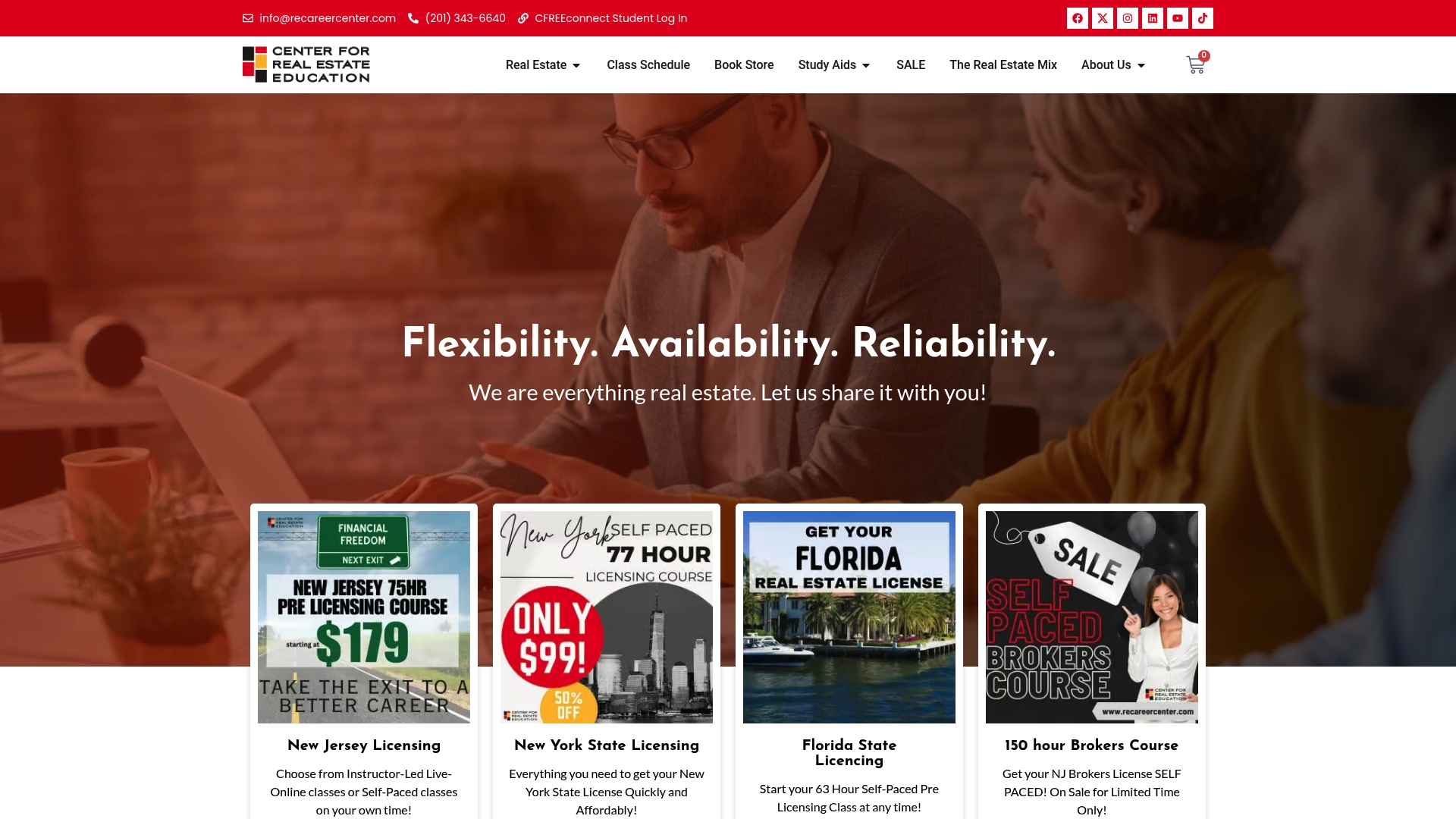
Recareercenter offers self-paced, live online, and in-person pre-licensing courses across New Jersey, New York, Florida, and Pennsylvania. Students get access to practice exams, study aids, and instructor support without being locked into a fixed classroom schedule. Whether you are starting from scratch or finishing a course you started before, Recareercenter has a format that fits. Browse the full catalog of real estate licensing courses and find the option that matches your timeline and your life.
Thirty to forty-five minutes of focused daily study, five to six days per week, is the recommended approach for working adults. Roughly 17 hours of active study spread over six weeks is sufficient when sessions use active recall rather than passive reading.
Active learning is the most effective method. Attempting practice questions before consulting your notes, then analyzing every wrong answer, improves retention three to five times over reading a textbook.
Yes. The key is consistency over volume. Short daily sessions built around your energy peaks and dead-time windows make full-time study preparation realistic without requiring you to sacrifice sleep or personal time.
One missed session is rest. The rule to follow is to never miss two sessions in a row. Skipping two consecutive sessions breaks momentum and significantly raises the risk of abandoning preparation entirely.
Self-paced online courses for real estate are the best format for most working adults. They allow you to study on your own schedule, pause during busy work periods, and resume without losing progress.
 — Noelle Friedman, Executive Director, Center for Real Estate Education