
The skills real estate agents need to diversify go far beyond closing residential sales. They include systems thinking, multi-disciplinary market knowledge, creative deal structuring, and the ability to monetize local expertise in ways most agents never consider. Over 80% of real estate agents had not closed a single deal by Q1 2026, up from 71% the prior year. That gap between licensed and productive is exactly where diversified skills make the difference between a stalled career and a thriving one. Recareercenter offers structured programs in commercial real estate, investment essentials, and brokerage development to help agents build exactly these competencies.
Systems thinking is the most critical skill for agents in 2026, defined as the ability to see how leasing, net operating income (NOI), refinancing, and investor distributions connect as a single financial ecosystem. Most agents treat each transaction as an isolated event. Agents who think in systems see how a lease renewal affects NOI, which affects refinancing terms, which affects what an investor will pay for the asset.
This skill separates generalists who outperform specialists. A specialist knows cap rates. A systems thinker knows how a 5% rent increase ripples through debt service coverage ratios and changes a buyer’s offer ceiling. That kind of analysis earns trust from investors and developers, not just homebuyers.
Developing systems thinking takes deliberate practice. Start with these steps:
Pro Tip: Take one residential deal you closed and rebuild it as if it were an investment property. Calculate the NOI, estimate a cap rate, and price it as an investor would. That exercise alone will change how you present value to future clients.
Multi-disciplinary expertise combining brokerage, development, and interior design gives agents a measurable competitive edge, particularly in luxury and ultra-luxury markets. A generalist agent can describe square footage. An agent with construction literacy can explain why a home’s framing method affects long-term durability, and that specificity closes deals.

Clients in high-end markets do not just want someone to open doors. They want an advisor who can tell them whether a renovation budget is realistic, whether a floor plan can be reconfigured, and whether the finishes will hold their value. Agents who can answer those questions from experience command higher commissions and stronger referrals.
The practical benefits of cross-disciplinary knowledge include:
“I’m not just a realtor. I’m a broker, developer, and interior designer. That combination lets me evaluate a property at every level, from the foundation to the finishes, in a way that a single-discipline agent simply cannot.”
— Hilary Musser, West Palm Beach luxury agent, via KeyCrew
Agents who want to build this knowledge do not need a design degree. Attending open houses in new construction, taking a single course in construction management, and spending time with contractors on active job sites builds practical literacy faster than any classroom alone.
Creative financing knowledge enables agents to salvage deals that traditional bank financing would kill. Structures like short-term loans with balloon payments, seller carryback financing, and subject-to transactions create paths to closing when a buyer cannot qualify for a conventional mortgage. Each of those closed deals is a commission that would otherwise disappear.
Diversifying the types of transactions you close is one of the fastest ways to stabilize income. Agents who only work residential resales are entirely dependent on interest rate cycles. Agents who also handle leasing, commercial transactions, and investment property sales have multiple income streams running simultaneously.
The transaction types worth adding to your skill set, in order of entry difficulty:
Pro Tip: Before adding mortgage brokerage to your license portfolio, check your state’s dual-licensing rules. New Jersey, New York, Florida, and Pennsylvania each have specific requirements. Recareercenter’s continuing education courses cover state-specific compliance for agents expanding their license scope.
Local knowledge is an asset most agents undervalue. The agent who knows every block, every landlord, and every zoning quirk in a market can monetize that knowledge in ways that have nothing to do with listing agreements.
Short-term rental consulting is one of the highest-margin opportunities available. Agents charge $150 to $300 per hour for Airbnb and Vrbo setup services, applying their local regulatory knowledge and market data to help hosts price, list, and manage properties. That hourly rate exceeds most agents’ effective per-hour earnings on a standard residential commission.
Property tax appeal work generates income even faster. Case resolutions typically take 60 to 180 days, making it one of the quickest ways to convert local market knowledge into cash flow. Agents who understand assessed values, comparable sales, and local assessment cycles can represent property owners in appeals and earn contingency fees on the savings.
Referral networks require the least effort of any diversification strategy. Referral fees range from 10% to 20% on successful transactions with no ongoing workload after the initial introduction. An agent with a strong book of clients who relocate out of state can build a referral network that generates passive income year-round.
| Income Stream | Effort Level | Typical Fee Range | Time to First Income |
|---|---|---|---|
| Short-term rental consulting | Medium | $150–$300/hour | 1–4 weeks |
| Property tax appeals | Medium | Contingency on savings | 60–180 days |
| Referral network | Low | 10–20% of commission | Varies |
| BPOs | Low to medium | Per-order flat fee | 1–2 weeks |
Pro Tip: To build a referral business fast, contact three agents in markets where your past clients have relocated. Offer a reciprocal referral agreement in writing. Most agents respond within a week, and the first referral fee typically covers the time investment many times over.
Agents who generate their own leads are insulated from brokerage changes, market slowdowns, and referral droughts. Digital visibility is now a core competency, not a marketing add-on. Agents who understand real estate SEO and content strategy attract inbound leads without paying per click, which changes the economics of client acquisition entirely.
Side ventures aligned with core brokerage build expertise and community ties that feed the main business. An agent who writes a weekly neighborhood market report builds authority, attracts search traffic, and positions themselves as the local expert before a client ever picks up the phone. That positioning is worth more than any paid lead source over a three-year horizon.
The ability to communicate value without hype and maintain composure under pressure are the soft skills that make digital visibility convert. An agent can rank on the first page of Google and still lose clients if their follow-up communication lacks clarity and confidence. Technical visibility and interpersonal credibility work together.
Agents who build systems thinking, multi-disciplinary knowledge, and creative deal skills are the ones who generate stable income regardless of market conditions.
| Point | Details |
|---|---|
| Systems thinking drives income | Connect leasing, NOI, and financing to advise investors and close more complex deals. |
| Cross-disciplinary skills close luxury deals | Construction and design literacy builds client trust and commands higher commissions. |
| Creative financing expands your client pool | Seller carryback and lease-option structures close deals that traditional financing cannot. |
| Local knowledge has direct dollar value | Short-term rental consulting and tax appeal work convert expertise into immediate cash flow. |
| Referral networks are the easiest win | A 10–20% referral fee with no ongoing work is the highest-margin use of an existing client list. |
Most agents treat diversification as a backup plan. They add a new skill only after a slow quarter forces their hand. That reactive approach almost always costs more than it earns, because you are learning under financial pressure instead of building from a position of strength.
The agents I have seen build genuinely durable careers treat skill-building as a continuous operating expense, not a crisis response. They take one course per quarter. They shadow professionals in adjacent fields. They read financial models even when they are not working on investment deals. That consistency compounds over time in a way that a single certification never does.
The shift I find most underrated is the move from transactional thinking to systems thinking. Once you understand how a lease affects an asset’s value, how that value affects financing, and how financing affects what an investor will pay, you stop being a salesperson and start being an advisor. Clients pay advisors more, refer them more often, and stay loyal through market cycles.
Recareercenter’s programs in commercial real estate, investment essentials, and brokerage development are built around exactly this kind of applied, career-stage-specific learning. The investment essentials course is one of the most practical starting points I have seen for agents who want to move from residential sales into investment advisory work.
The agents who thrive in 2026 and beyond will not be the ones who know the most about residential contracts. They will be the ones who can walk into any room, whether it holds a first-time buyer, a commercial developer, or a short-term rental investor, and speak with authority about what that client actually needs.
 — Noelle Friedman, Executive Director, Center for Real Estate Education
Recareercenter offers structured courses designed for working agents who want to expand their income without starting over. Programs cover commercial real estate, investment fundamentals, brokerage development, and continuing education across New Jersey, New York, Florida, and Pennsylvania.
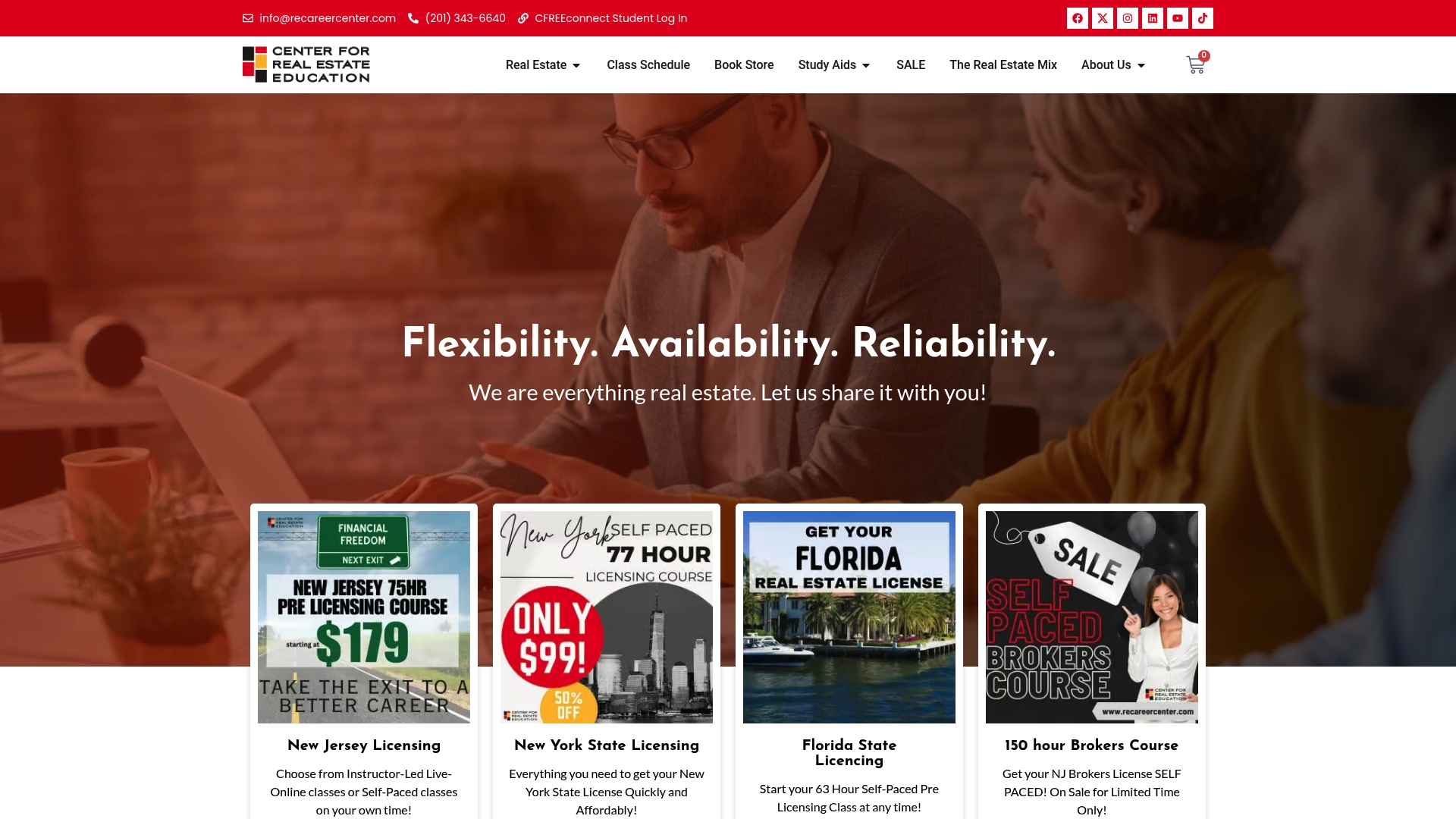
Whether you prefer live online sessions, self-paced modules, or in-person instruction, Recareercenter’s real estate course catalog includes options that fit around your current schedule and license requirements. Agents at every career stage, from newly licensed to multi-decade veterans, will find programs that add real, marketable skills. You can also review online vs. in-person learning formats to find the structure that works best for how you actually learn.
Systems thinking, creative deal structuring, and multi-disciplinary market knowledge are the top skills. These allow agents to serve investors, luxury buyers, and commercial clients beyond standard residential transactions.
Agents can earn through short-term rental consulting at $150–$300 per hour, property tax appeal work, broker price opinions, and referral fees of 10–20% on transactions they refer to other agents.
Systems thinking is the ability to connect leasing, NOI, refinancing, and investor distributions as a single financial picture. It allows agents to advise clients at an investment level rather than a transactional one.
Most agents can add a functional new skill set, such as investment analysis or creative financing, within one to two quarters of focused study and practical application.
Yes. Recareercenter provides continuing education, specialty certifications, and professional development programs specifically for licensed agents who want to expand into commercial real estate, investment advising, and brokerage development.