Choosing how to study for your real estate license is just as consequential as choosing where to study. The types of online real estate learning formats available today range from fully self-paced video courses to live virtual classrooms and hybrid models that blend both worlds. Each format comes with its own trade-offs around flexibility, cost, instructor access, and how well it fits your life. Get this decision wrong and you risk stalling out before exam day. Get it right and you set yourself up to pass faster and enter the field with confidence.
| Point | Details |
|---|---|
| Format affects more than convenience | The format you choose shapes your accountability, interaction level, and how well you retain material. |
| Self-paced has real limits | State boards often impose minimum time frames, so “go at your own pace” has regulatory boundaries. |
| Live virtual classes build networks | Real-time sessions offer immediate feedback and peer connections that self-paced courses cannot replicate. |
| Hybrid models offer the best balance | Combining online flexibility with live touchpoints suits learners who want structure without rigidity. |
| Match format to your lifestyle | Your schedule, discipline level, and career goals should drive your format choice more than price alone. |
Self-paced, fully online courses are the most common format you will encounter when searching for online real estate courses. You log in when you want, work through video lectures at your own speed, and complete quizzes and assignments on your schedule. There are no class meetings and no live instructor waiting for you at a specific time.
Most online schools offer self-paced learning so students can progress flexibly based on their background and comfort level with the material. That means you can rewatch a confusing section on property law three times without slowing anyone else down, or skip quickly through content you already know from prior experience.
The benefits are real, but so are the drawbacks:
One thing most people do not expect: self-paced does not mean unlimited speed. State licensing boards often impose minimum time-frame requirements, meaning a 63-hour pre-licensing course cannot be finished in a single weekend no matter how fast you read.
Pro Tip: Set a personal deadline two weeks before your target exam date and work backward to build a weekly study schedule. Treat it like a class with a fixed end date, even though it is technically self-paced.
Live virtual real estate training puts you in a scheduled online classroom with a real instructor and other students, all meeting at the same time via video conferencing. Think of it as a traditional classroom moved entirely online. Sessions run on fixed days and times, and attendance is expected.

The payoff for that structure is significant. Live virtual classes provide real-time interaction, immediate Q&A opportunities, and foster networking between students. When a peer asks a question you did not think to ask, you benefit from the answer. That kind of organic learning does not happen in a solo video session.
Here is what makes live virtual formats stand out:
The trade-off is flexibility. If your schedule shifts, missing a live session means catching up on a recording, which reduces the interactive benefit. This format works best for learners who have predictable weekly schedules and genuinely want the classroom feel without commuting.
Recareercenter offers live virtual classes for both pre-licensing and broker-level programs, which is a strong option if you want real instructor access without leaving your home.
Pro Tip: Before enrolling in a live virtual program, check whether missed sessions are recorded and how long recordings stay accessible. Some programs delete them after 48 hours.
Hybrid formats combine the flexibility of self-paced online content with the engagement of live sessions or occasional in-person meetups. You might complete readings and video modules on your own time during the week, then join a live virtual review session on Saturday morning. Some programs include optional local meetups for networking or exam prep workshops.
Hybrid learning models combine online self-paced coursework with live or in-person sessions, giving learners both flexible pacing and live engagement opportunities. That combination addresses the two biggest complaints about each format individually: self-paced courses feel isolating, and live courses feel rigid.
What to look for in a hybrid program:
Hybrid programs often cost slightly more than pure self-paced options, but the added structure and interaction tend to improve completion rates and exam pass rates. If you have struggled with self-discipline in solo online courses before, a hybrid format may be the format that actually gets you licensed.
Not every real estate learning format is designed to take you from zero to licensed. Microlearning refers to short, focused courses that cover a single topic in depth. Think a two-hour module on understanding escrow, a weekend workshop on commercial leasing basics, or a certification course on property management.
These formats are particularly useful for licensed agents who need continuing education credits or want to expand into a specialty area. They are also a smart supplement to your primary pre-licensing course. If you are struggling with a specific concept like fair housing law or contract writing, a targeted short course can fill the gap faster than rewatching a full lecture.
Additional formats worth knowing:
These formats work best as complements, not replacements, to a full pre-licensing program. Use them to reinforce what you are learning, not to shortcut the process.
Exam prep is its own category of virtual real estate training, and it deserves separate attention. Passing your state licensing exam requires more than understanding the content. You need to recognize how questions are phrased, manage your time under pressure, and identify which topics your state emphasizes most.
Dedicated exam prep platforms offer timed practice tests that mirror the actual exam format, detailed explanations for every answer, and progress tracking so you know exactly which subjects need more work. Some platforms use adaptive technology that adjusts question difficulty based on your performance, which accelerates your readiness more efficiently than simply retaking the same test.
Many of the best online real estate programs bundle exam prep tools directly into their pre-licensing packages. If yours does not, budget for a standalone exam prep subscription. The cost is minimal compared to the fee for retaking a failed state exam.
Use this table to evaluate which format fits your situation before you commit.
| Format | Schedule flexibility | Instructor access | Interaction level | Best for |
|---|---|---|---|---|
| Self-paced online | Very high | Email or chat only | Low | Self-motivated, busy learners |
| Live virtual classroom | Low to moderate | Real-time, direct | High | Learners wanting structure and feedback |
| Hybrid or blended | Moderate | Mixed: async and live | Moderate to high | Learners wanting balance of both |
| Microlearning or short courses | Very high | Minimal | Low | CE credits, specialty topics |
| Exam prep platforms | Very high | None | None | Test readiness, final review |
Online real estate courses tend to cost 30 to 60 percent less than in-person equivalents, which makes the online formats above more accessible across the board. The right choice depends less on price and more on what kind of learner you are.
Knowing the formats is step one. Applying that knowledge to your actual life is step two. Here is a practical framework for making the decision:
Pro Tip: If you are genuinely unsure, start with a hybrid program. It gives you the flexibility of self-paced study while keeping you connected to an instructor and peers. You can always shift formats for continuing education later.
I have seen a lot of students make the same mistake. They choose the cheapest self-paced course they can find, assume motivation will carry them through, and then stall out around week three when life gets busy. The format was not the problem. The mismatch between the format and their actual habits was.
In my experience, the most underestimated factor in online real estate learning is instructor access. Live instructor access dramatically improves understanding of complex topics, and real-time Q&A is often more effective than solo study with occasional email support. When you hear a peer ask a question you did not think to ask, something clicks that a recorded video never triggers.
What I would tell anyone starting out: do not treat the license as the finish line. It is the starting point. The agents I have seen build real careers are the ones who kept learning after they passed. They took specialty courses, found mentors, and stayed curious. The format you choose for pre-licensing matters, but the habit of continuous learning matters far more.
— Noelle
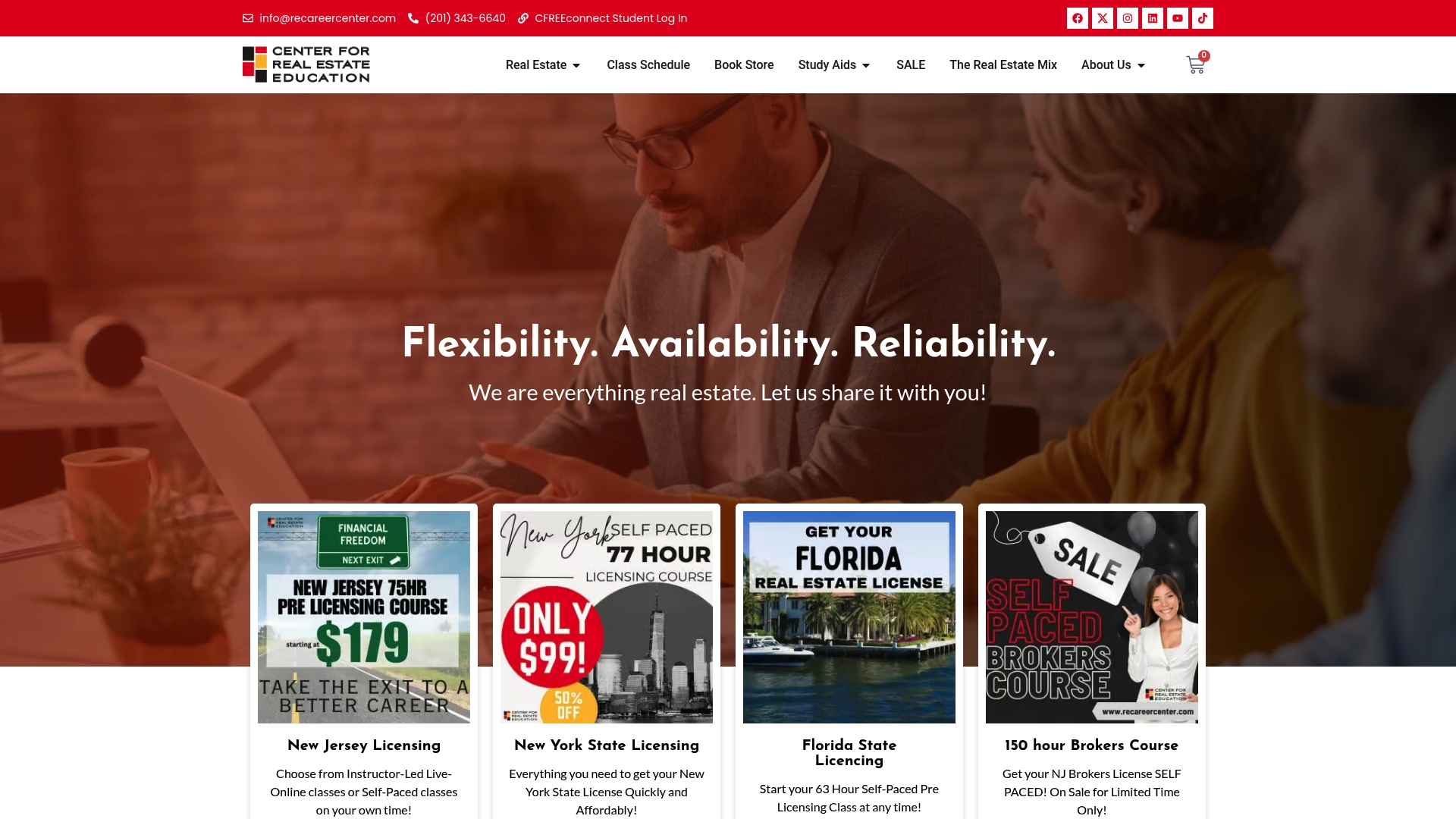
Recareercenter offers the full range of formats discussed in this article, including self-paced online courses, live virtual classes, and hybrid programs across New Jersey, New York, Florida, and Pennsylvania. Whether you are starting from scratch or adding a second state license, there is a format designed around your schedule and goals.
Students get access to instructor support, exam prep tools, and career support resources that go well beyond the coursework itself. Programs are state-approved and ARELLO-certified, so you can trust the hours you complete will count toward your license.
Ready to compare your options side by side? Visit the online vs. in-person guide at Recareercenter to find the program that fits your life, or explore flexible training options built for busy schedules.
The main types include self-paced video courses, live virtual instructor-led classes, hybrid programs that combine both, microlearning or short-topic courses, and dedicated exam prep platforms. Each format differs in flexibility, instructor access, and interaction level.
The overwhelming majority of U.S. states approve online pre-licensing education when providers meet state standards, including states like Virginia, Colorado, Michigan, and Tennessee. Always verify your specific state’s requirements before enrolling.
Not always. State licensing boards often impose minimum time-frame requirements, meaning you cannot rush through a 63-hour course in a single weekend regardless of how quickly you absorb the material.
It depends on your learning style. Live virtual classes offer real-time feedback and peer interaction that self-paced courses cannot match, but they require a fixed schedule. Self-paced formats offer more flexibility but demand stronger personal discipline.
Online real estate courses generally cost 30 to 60 percent less than in-person classroom programs, making them the more accessible option for most learners without sacrificing educational quality.