
You already have a full-time job, a packed schedule, and real ambitions in real estate. The good news is that pursuing real estate education while working full-time is not only possible — it is exactly what thousands of working professionals do every year. The path is more structured than most people expect, and the time commitment is far more manageable than the rumors suggest. This guide breaks down what you actually need to know: state requirements, format options, study strategies, and the post-licensing steps that trip people up.
| Point | Details |
|---|---|
| Requirements vary by state | Pre-licensing hours range from 40 to 180+, so your timeline depends heavily on where you live. |
| Flexible formats exist | Self-paced online and live-streamed courses are built specifically for busy working adults. |
| Study consistency beats intensity | Short daily study sessions outperform weekend cramming for retention and exam performance. |
| Administrative steps take time | Background checks and broker onboarding can add 2 to 8 weeks beyond your coursework. |
| Part-time launch is realistic | Many new agents successfully balance a real estate career alongside full-time employment. |
One of the biggest misconceptions about getting licensed is that it takes a year or more. In reality, licensing timelines range from as little as 2 weeks to around 20, depending on your state and how much time you commit each week.
The primary variable is pre-licensing education hours. State requirements vary dramatically, from just 40 hours in Michigan to 180 hours in Texas. Florida requires 63 hours, New Jersey and Pennsylvania both require 75 hours, New York requires 77 hours, and Texas tops out at 180 hours. That spread matters enormously when you are planning around a 40-hour work week.
Beyond time, you need to budget realistically. Total licensing costs in 2026 typically run between $375 and $770 when you factor in course tuition, the state exam fee, and the license application itself. Exam fees alone range from $15 in New York to $121 in Georgia, so your state of choice meaningfully affects your out-of-pocket expense.
| State | Required hours | Exam fee | Estimated total cost |
|---|---|---|---|
| Michigan | 40 hours | ~$79 | ~$375 |
| Florida | 63 hours | ~$36 | ~$450 |
| New Jersey | 75 hours | ~$46 | ~$400 |
| New York | 77 hours | ~$15 | ~$410 |
| Texas | 180 hours | ~$43 | ~$770 |
Pro Tip: Check your state’s real estate commission website for the most current hour requirements and approved course providers before enrolling. Requirements do change, and you want to be sure your course counts.
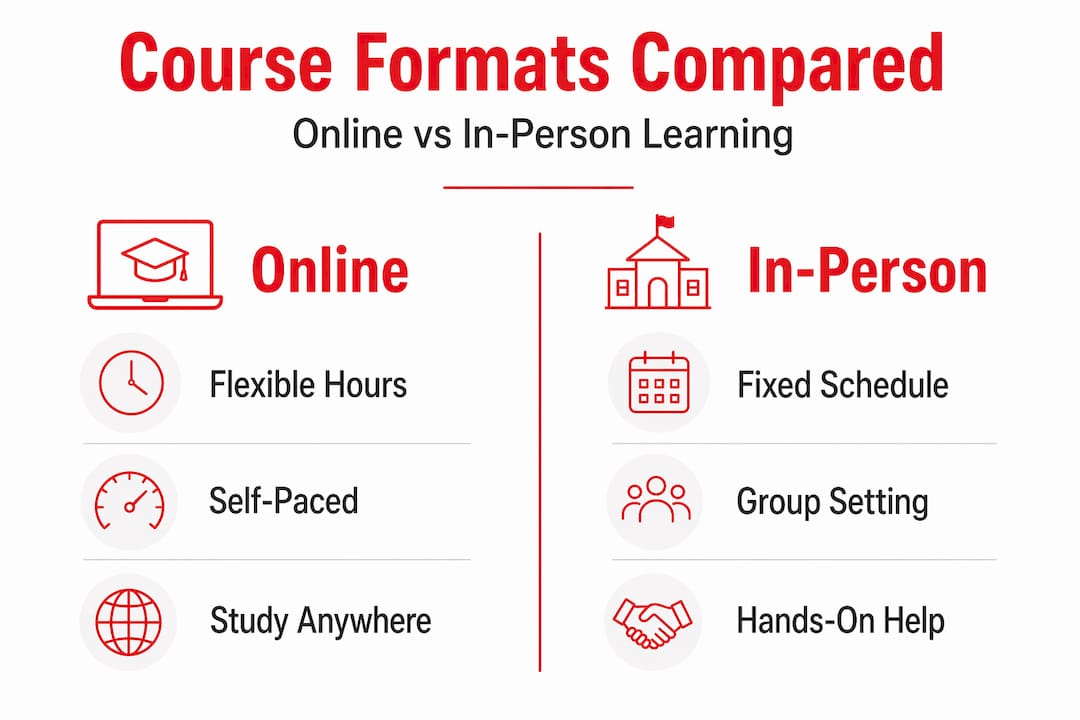
Not every real estate program is designed with a working adult in mind. Choosing a format that fits your life makes the difference between finishing the course and abandoning it three weeks in.

Self-paced online courses are the most popular option for full-time workers because you control when and where you study. No commute, no rigid start time, and the ability to pause and rewind lessons when life interrupts. The tradeoff is accountability. Without a schedule imposed on you, it is easy to let the coursework drift.
Live-streamed evening classes solve that problem. Some schools offer rolling weekly start dates and evening sessions specifically to serve working professionals. You get the structure of a classroom and the ability to ask questions in real time, without needing to take time off work. Recareercenter offers exactly this kind of flexibility across its New Jersey, New York, Florida, and Pennsylvania programs.
| Format | Best for | Flexibility | Interaction level |
|---|---|---|---|
| Self-paced online | Maximum schedule freedom | Very high | Low |
| Live-streamed evening | Structure with flexibility | High | Medium to high |
| In-person classes | Hands-on learners | Low | Very high |
Here is what to consider when choosing:
For a side-by-side breakdown, Recareercenter’s comparison of online vs in-person courses is worth reviewing before you commit.
Pro Tip: If you go the self-paced route, block your study time on your calendar the same way you would a work meeting. Treating it as optional is the fastest way to fall behind.
The professionals who pass their state exam while working full-time share one trait: consistency over intensity. Studying 30 to 45 minutes a day, five days a week, beats a six-hour Saturday session every time. Your brain retains information better with repeated short exposures than with long, exhausting marathons.
Here is a study approach that works specifically for busy schedules:
“Real estate exam prep isn’t about covering everything once. It’s about hammering the concepts that you keep missing until they stick.”
Recareercenter’s resource on exam preparation methods goes deep on which study methods are tied to better pass rates, including specific tools and techniques worth building into your routine. And if motivation is your challenge, the guide on staying focused while studying addresses the mental side of this process in practical terms.
Pro Tip: Schedule your state exam before you finish the course. Having a test date on the calendar creates urgency that keeps your study pace honest.
This is the stage that surprises most people. Completing your pre-licensing education does not mean you are licensed. There is a sequence of administrative steps that adds real time to the process, and underestimating them causes unnecessary frustration.
After you finish your coursework, here is what typically follows:
Administrative steps including background checks and broker onboarding commonly add 2 to 8 weeks beyond the education phase. If you are targeting a specific launch date, build this buffer into your plan from the start.
Finding the right sponsoring broker deserves more attention than most licensing guides give it. The broker you choose shapes your early career experience significantly. Look for one that offers training support, reasonable commission splits for new agents, and a culture that respects that you may be starting part-time.
Speaking of part-time: starting your real estate career alongside a full-time job is entirely viable, but it requires honest financial planning. Real estate income is commission-based, which means irregular early on. Keep your full-time income as your financial foundation while you build your client base, and set a realistic timeline for when you expect to hit your first deal.
Real estate education for full-time workers is not just about getting through the course. It is about setting yourself up to launch a career you can sustain.
I have worked with hundreds of professionals trying to get licensed while managing demanding jobs, family schedules, and everything in between. Here is what I have learned that most guides skip over.
The time you spend in the course is rarely the obstacle. I’ve seen people with 60-hour work weeks complete their pre-licensing education in eight weeks because they committed to 45 minutes each morning before logging into their jobs. What derails people is not the workload. It is the gap between finishing the course and actually feeling ready to sit for the exam.
Most candidates underestimate how different the state exam feels compared to course material. The questions are designed to test judgment, not just memorization. This is why I tell every student to treat exam prep as a separate phase, not just a continuation of the course.
The other thing I push back on is the idea that you need to quit your job to launch a real estate career. That pressure is often self-imposed or comes from brokers who want full-time commitment. The reality is that part-time real estate careers are legitimate, especially in the first year when you are building your network and getting your systems in place.
If you are looking at options for real estate education for full-time workers, be selective. Choose a program that fits your schedule and an instructor or support system that will answer your questions, not just grade your quizzes. The format matters less than the follow-through.
— Noelle
If you are serious about getting licensed without putting your career on pause, Recareercenter was built specifically for people in your position.
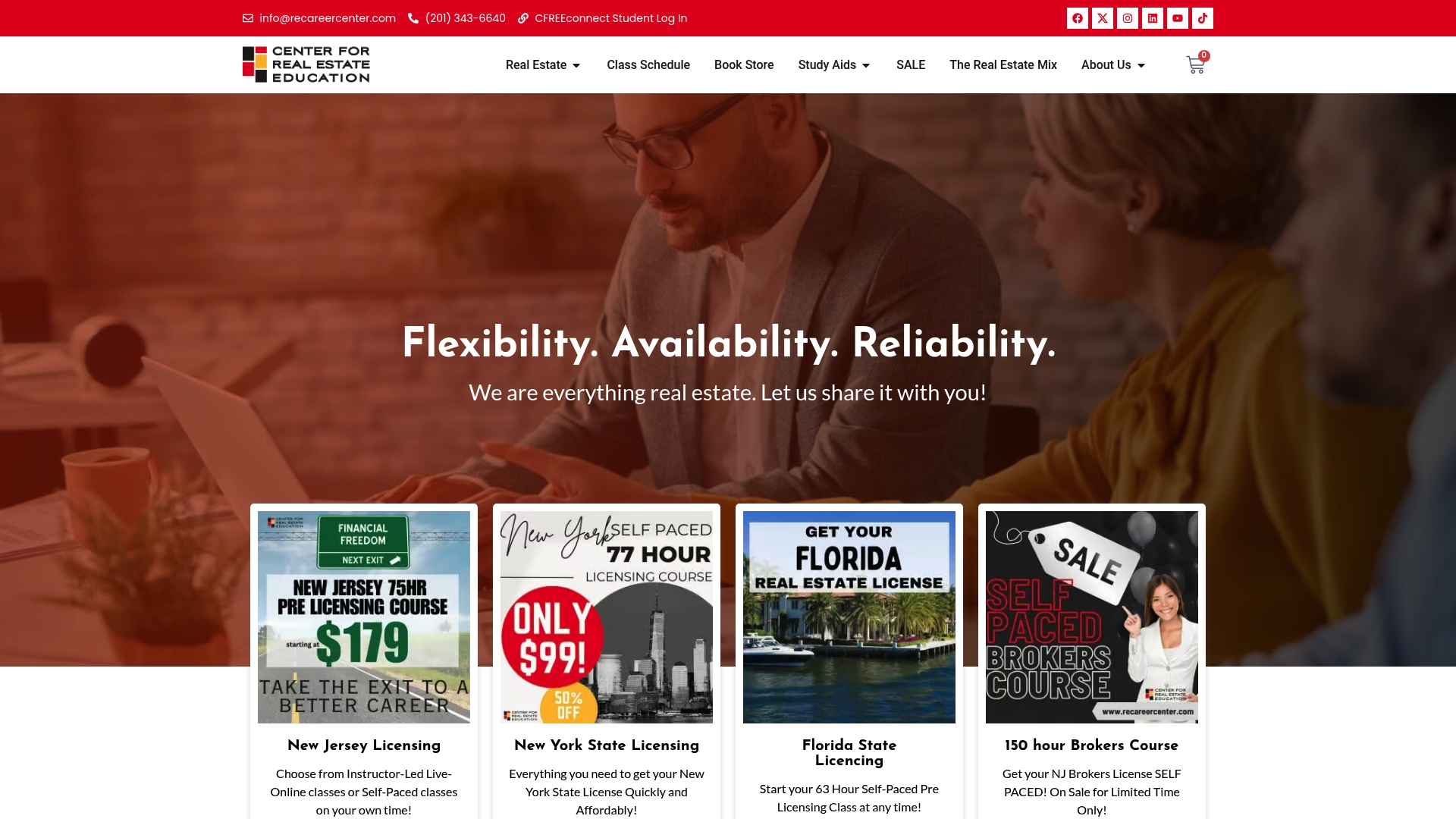
Recareercenter offers self-paced online, live-streamed, and in-person pre-licensing programs across New Jersey, New York, Florida, and Pennsylvania, with flexible start dates that do not require you to rearrange your life. Beyond the course itself, Recareercenter provides job placement support, broker matching guidance, and exam prep resources designed to increase your odds of passing on the first attempt. For professionals who want to see exactly what the path looks like before they commit, the licensing timeline overview is a clear, state-specific breakdown of every step from enrollment to exam day.
Pre-licensing education ranges from 40 to 180+ hours depending on your state. Michigan requires just 40 hours, while Texas requires 180.
Yes. Self-paced online courses and evening live-streamed classes are specifically designed so you can study real estate after hours without missing work.
The total timeline typically runs 6 to 20 weeks, depending on your state’s hour requirement, how much time you study each week, and how long administrative processing takes.
First-time pass rates range from 50 to 60% nationally. Consistent use of practice exams significantly improves your chances.
No. Many new agents start part-time with a broker while keeping their full-time income, using commission earnings to build financial stability before making any transition.